

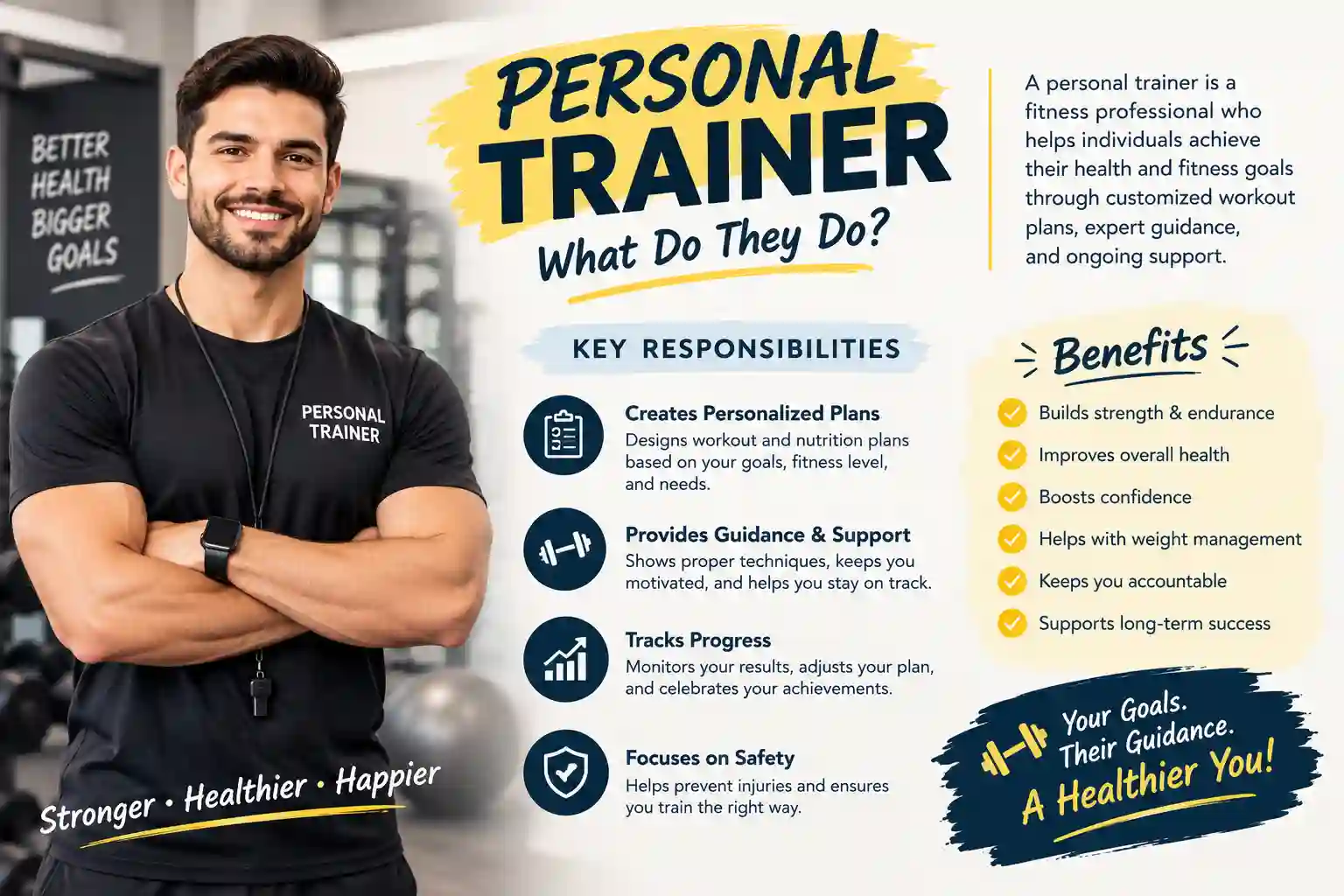
A personal trainer helps people improve their fitness, build strength, and reach their health goals. They create workout plans, demonstrate exercises, track progress, and motivate clients to stay active. A good personal trainer also understands exercise safety and knows how to adjust workouts for different fitness levels.
If you are applying for a fitness job, understanding a personal trainer description can help you prepare a strong resume. Employers want to know about your fitness knowledge, communication skills, certifications, and ability to support clients.
This guide covers personal trainer duties, skills, education requirements, job description examples, resume descriptions, salary information, and how to become a personal trainer.
What Is a Personal Trainer?
A personal trainer is a fitness professional who helps individuals follow exercise programs based on their needs and goals. These goals may include losing weight, building muscle, improving flexibility, increasing strength, or maintaining general fitness.
Personal trainers may work in gyms, fitness studios, private homes, corporate wellness programs, or online training services. Some work with beginners, while others help experienced athletes improve their performance.
A personal trainer does more than demonstrate exercises. They assess clients’ fitness levels, explain correct techniques, monitor progress, and adjust workout plans when necessary.

Personal Trainer Job Description
A personal trainer job description explains the main duties, qualifications, and skills required for the role. Although responsibilities vary by employer, most personal trainers help clients exercise safely and work toward realistic fitness goals.
A typical personal trainer job description includes the following responsibilities:
- Meet with clients to discuss their fitness goals and exercise experience.
- Conduct fitness assessments and identify individual needs.
- Create personalized workout plans.
- Demonstrate proper exercise techniques.
- Teach clients how to use fitness equipment safely.
- Monitor progress and update training programs.
- Encourage clients to remain consistent with their routines.
- Maintain records of workouts and client progress.
- Keep training areas clean and organized.
- Follow workplace safety procedures.
Personal trainers should also understand the limits of their role. They can provide general fitness guidance, but medical conditions, injuries, and specialized dietary needs may require advice from qualified healthcare professionals.
Duties and Responsibilities of a Personal Trainer
Personal trainer duties depend on the workplace and the clients they serve. However, several responsibilities are common across most fitness settings.
Conduct Fitness Assessments
Trainers discuss a client’s goals, exercise history, current activity level, and relevant limitations. They may use suitable fitness tests to understand the client’s starting point and plan appropriate workouts.
Develop Personalized Workout Plans
Each client has different needs. A beginner may need simple exercises, while an experienced client may want a more challenging strength program. Trainers select exercises based on fitness levels, goals, and available equipment.
Demonstrate Correct Exercise Techniques
Personal trainers show clients how to perform exercises with proper form. This helps clients understand movements, use equipment correctly, and reduce avoidable risks.
Monitor Client Progress
Trainers review workout records, exercise performance, and progress toward goals. They can adjust the program when a client improves, struggles with an exercise, or needs a different approach.
Motivate and Support Clients
Building new habits can be difficult. Personal trainers offer encouragement, explain realistic expectations, and help clients maintain a consistent exercise routine.
Maintain Professional Records
Trainers may document assessments, workout plans, attendance, progress, and relevant client feedback. Accurate records help them make informed adjustments and provide consistent service.
Essential Personal Trainer Skills
Personal trainer skills include exercise knowledge and the ability to communicate effectively with clients. Employers often look for candidates who can create suitable programs, explain movements clearly, and build positive professional relationships.

Important skills include:
- Communication: Explain exercises clearly and listen to client concerns.
- Motivation: Encourage clients to stay committed to their goals.
- Workout planning: Create routines that match different fitness levels.
- Fitness assessment: Understand client needs and starting abilities.
- Progress tracking: Record results and adjust training plans.
- Time management: Organize appointments and training sessions.
- Problem-solving: Adapt exercises when a client faces difficulties.
- Safety awareness: Recognize exercise risks and teach proper techniques.
- Customer service: Build trust and provide a positive training experience.
- Organization: Keep schedules, workout plans, and client records accurate.
Personal trainers also benefit from patience, professionalism, and a willingness to keep learning.
Personal Trainer Education Requirements and Certifications
Personal trainer education requirements vary by employer and location. Some employers accept a high school diploma or equivalent with a recognized personal training certification. Others prefer a college degree in exercise science, kinesiology, physical education, or a related subject.
Many employers also require CPR and first aid credentials. Some may ask for Automated External Defibrillator (AED) training.
Common certification organizations include:
- National Academy of Sports Medicine (NASM): Offers personal training education and certification programs.
- International Sports Sciences Association (ISSA): Provides fitness education and personal training certification options.
- American Council on Exercise (ACE): Offers fitness certifications and educational resources.
- American College of Sports Medicine (ACSM): Provides certifications and resources related to exercise and health.
- National Strength and Conditioning Association (NSCA): Offers professional credentials, including strength and conditioning certifications.
Certification requirements differ between programs. Before choosing one, check its eligibility rules, exam requirements, renewal process, and acceptance by employers in your area.
How to Choose a Personal Trainer Certification
Choose a certification based on your career goals, budget, and the requirements of the jobs you want. Compare course content, study options, exam format, ongoing education requirements, and employer preferences.
For example, someone interested in general gym-based personal training may prioritize a recognized personal trainer certification, while someone interested in athletic performance may explore additional strength and conditioning education.
Do not choose a certification based on its name alone. Confirm that it meets the requirements of your intended employer and location.
Personal Trainer Description Examples
A personal trainer description sample can help you understand how to describe the role in a job application. The best example depends on your experience, qualifications, and the type of position you want.
Entry-Level Personal Trainer Description
Enthusiastic fitness professional with knowledge of basic exercise techniques, workout planning, and fitness principles. Eager to support clients, develop practical coaching skills, and help people work toward their fitness goals.
Experienced Personal Trainer Description
Experienced personal trainer skilled in creating customized workout programs, demonstrating safe exercise techniques, and monitoring client progress. Focused on helping clients improve strength, flexibility, and overall fitness through structured training and motivation.
Certified Personal Trainer Description
Certified personal trainer with knowledge of fitness assessments, exercise programming, and client coaching. Able to develop suitable workout plans, explain proper exercise form, and support clients as they work toward realistic fitness goals.
NASM Certified Personal Trainer Description
NASM-certified personal trainer with training in exercise programming, fitness assessment, and safe workout techniques. Committed to helping clients build consistent exercise habits and improve their fitness through individualized coaching.
Use this description only if you hold the relevant NASM credential.
ISSA Certified Personal Trainer Description
ISSA-certified personal trainer with knowledge of workout planning, exercise instruction, and client support. Skilled at adapting training sessions to individual goals and encouraging clients to maintain healthy activity habits.
Use this description only if you hold the relevant ISSA credential.
Personal Fitness Trainer Description
Personal fitness trainer who helps clients improve strength, endurance, flexibility, and general fitness through personalized exercise programs. Provides instruction, monitors progress, and encourages safe and consistent training.
Crunch Fitness Personal Trainer Job Description
A personal trainer working at a gym such as Crunch Fitness may help members set fitness goals, learn exercise techniques, follow workout plans, and use equipment correctly. Specific duties, qualifications, pay, and employment conditions depend on the actual job posting and location.
Applicants should review the current employer listing to confirm the role’s exact requirements instead of assuming that every location has the same expectations.
Personal Trainer Description for Resume
A personal trainer description for a resume should be short, clear, and focused on your most relevant qualifications. Highlight your fitness knowledge, client support, certifications, and ability to create suitable workout programs.
Personal Trainer Resume Description Sample
Motivated personal trainer with knowledge of fitness assessments, exercise techniques, and personalized workout planning. Skilled in demonstrating proper form, tracking client progress, and encouraging healthy exercise habits. Committed to helping clients improve their strength, flexibility, and overall fitness.
Personal Trainer Resume Description With No Experience
If you are applying for your first personal training job, focus on your education, relevant certification, practical training, communication skills, and willingness to learn.
Example:
Entry-level personal trainer with a foundation in exercise principles, workout planning, and fitness safety. Strong communication and organizational skills, with a commitment to supporting clients and developing effective coaching techniques. Eager to gain practical experience in a professional fitness environment.
Do not claim professional experience or certifications you have not earned.
Personal Trainer Resume Description for Experienced Candidates
Experienced personal trainer with a background in developing workout programs, teaching exercise techniques, and tracking client progress. Skilled in adapting sessions to individual fitness levels, maintaining professional client relationships, and encouraging consistent participation.
Add measurable achievements only when you can support them with accurate information.
Tips for Writing a Strong Personal Trainer Resume
- Include relevant personal training certifications.
- Mention experience with fitness assessments and workout planning.
- Highlight communication, motivation, and time management skills.
- Use action words such as developed, coached, demonstrated, and monitored.
- Match your description to the duties listed in the job advertisement.
- Keep the summary concise and easy to read.
A separate cover letter can explain why you want the role and how your background matches the employer’s needs.
Personal Trainer Job Description Template
Employers can use this personal trainer job description template to create a clear job advertisement. Adjust the details to match the workplace and actual hiring requirements.
Job Title: Personal Trainer
Job Summary:
We are seeking a motivated personal trainer to help clients improve their fitness and work toward their individual health goals. The successful candidate will conduct fitness assessments, develop personalized workout plans, demonstrate safe exercise techniques, and monitor client progress.
Key Responsibilities:
- Assess clients’ fitness levels, needs, and goals.
- Design personalized exercise programs.
- Demonstrate proper workout techniques.
- Monitor progress and update training plans.
- Encourage clients to maintain consistent exercise habits.
- Maintain accurate training records.
- Keep the training area safe and organized.
- Communicate professionally with clients and team members.
Qualifications:
- Relevant personal training certification, as required.
- Knowledge of exercise techniques and fitness principles.
- Strong communication and motivational skills.
- CPR and first aid credentials when required.
- Ability to work with clients at different fitness levels.
Employment Type: Full-time or part-time, depending on the vacancy.
Employers should include accurate details about pay, working hours, experience, benefits, and application instructions before publishing the job advertisement.
Online Personal Trainer Job Description
An online personal trainer provides fitness coaching remotely through video calls, training platforms, messaging, or digital workout plans. The trainer helps clients follow exercise routines without needing to meet in person for every session.
Common responsibilities include:
- Discussing clients’ goals and fitness experience remotely.
- Creating personalized workout plans.
- Demonstrating exercises through videos or live sessions.
- Reviewing client feedback and progress reports.
- Adjusting workouts when appropriate.
- Providing motivation and answering training questions.
- Maintaining professional communication and client records.
Online trainers need strong communication, planning, and digital skills. They should also explain exercise safety clearly and recognize when a client may need in-person assessment or professional medical advice.
Client Assessment and Professional Responsibilities
Client assessment helps a personal trainer understand a person’s fitness goals, experience, preferences, and limitations before planning exercise sessions.
A basic assessment may include:
- Fitness goals and activity history.
- Exercise experience and preferred activities.
- Current fitness level, where appropriate.
- Available equipment and training environment.
- Relevant injuries or health concerns disclosed by the client.
- Practical barriers such as schedule and consistency.
Trainers should explain how client information will be used, keep records secure, and respect privacy. If a client reports a medical concern or an injury outside the trainer’s expertise, the trainer should recommend appropriate professional guidance rather than attempting to diagnose the condition.
Personal Trainer Professional Bio Examples
A personal trainer professional bio introduces your background, training approach, qualifications, and the clients you help. You can use it on a professional website, gym profile, or online coaching page.

Short professional bio:
I am a personal trainer who helps clients build healthier habits through structured workouts and practical fitness guidance. My approach focuses on safe exercise techniques, realistic goals, and consistent progress.
Experienced trainer bio:
I am an experienced personal trainer focused on helping clients improve strength, endurance, and general fitness. I create personalized workout plans, monitor progress, and adapt training sessions to meet individual needs.
Beginner trainer bio:
I am an aspiring fitness professional with a strong interest in exercise, healthy habits, and client support. I aim to help people build confidence through safe, structured training while continuing to develop my professional skills.
Add your real certifications, experience, and specialization where relevant. Avoid unsupported claims about results or qualifications.
A Typical Day in the Life of a Personal Trainer
A personal trainer’s daily routine depends on the workplace and client schedule. A typical day may include:
- Reviewing appointments and preparing workout plans.
- Meeting clients and discussing their progress.
- Conducting assessments or checking training goals.
- Demonstrating exercises and supervising sessions.
- Updating records after workouts.
- Cleaning or organizing training equipment.
- Preparing future sessions and communicating with clients.
Some trainers work early mornings or evenings because those times suit their clients. Independent trainers may also spend time marketing services, managing payments, and scheduling appointments.
Types of Personal Trainers
Personal trainers may specialize in different forms of exercise or work with particular groups of clients.
General Fitness Trainer
Helps clients improve overall fitness through strength, cardiovascular, and flexibility exercises.
Weight Management Trainer
Supports clients who want to improve fitness and build sustainable exercise habits. Trainers should avoid promising specific weight-loss results.
Strength and Conditioning Trainer
Focuses on strength, power, endurance, and physical performance. Additional education may be needed for specialized athletic training roles.
Group Fitness Instructor
Leads exercise sessions for several participants at once. Group instruction may require different qualifications from one-to-one personal training.
Online Personal Trainer
Provides remote coaching and customized workout plans through digital tools.
What Is a Personal Trainer Salary?
A personal trainer salary depends on location, experience, certifications, employer, working hours, and employment type. Some trainers earn an hourly wage or regular salary, while others receive session-based payments or work independently.
Factors that can affect earnings include:
- Years of professional experience.
- Relevant certifications and specializations.
- The number of clients and sessions.
- Full-time or part-time work.
- Location and type of fitness facility.
- Independent business expenses and client retention.
For an accurate estimate, compare current job advertisements and official labor statistics for your country or region. Salary figures from one location should not be treated as universal.
Personal Trainer Interview Preparation
Preparing for an interview can help you explain your qualifications and approach to client training. Employers may ask questions about exercise safety, communication, workout planning, and handling different client needs.

Prepare examples that explain how you would:
- Help a beginner start exercising safely.
- Adapt a workout to a client’s fitness level.
- Encourage a client who is losing motivation.
- Track progress and update a training plan.
- Respond when a client reports pain or discomfort.
- Communicate professionally with clients and coworkers.
Answer honestly and stay within your training and certification scope. If you have limited experience, explain what you have learned and how you would seek guidance when necessary.
Frequently Asked Questions
A personal trainer description should include the role’s main duties, required skills, education or certification requirements, and responsibility for helping clients exercise safely and work toward fitness goals.
Write a short summary of your relevant qualifications, certifications, exercise knowledge, and client coaching skills. Adjust it to match the job advertisement and avoid unsupported claims.
Important skills include communication, motivation, workout planning, fitness assessment, progress tracking, time management, organization, and exercise safety awareness.
Requirements vary by employer and location. Some positions require a recognized personal training certification and a high school diploma or equivalent, while others prefer a related college degree and additional safety credentials.
Many employers require or prefer a recognized personal training certification. Requirements vary, so check local rules and the specific employer’s job posting before applying.
Earnings vary according to location, experience, certifications, work schedule, and employment type. Check current local job listings and official salary data for the most relevant estimate.
You may qualify for entry-level opportunities if you meet the employer’s education and certification requirements. Relevant training, practical experience, and strong communication skills can help you prepare for your first role.
Yes. Online personal trainers provide remote workout plans, exercise demonstrations, progress reviews, and coaching through digital platforms.
Final Thoughts
A clear personal trainer description explains how a trainer helps clients improve fitness through personalized exercise programs, safe techniques, progress monitoring, and motivation.
If you are writing a resume, focus on your actual qualifications, certifications, and relevant skills. If you are an employer, use a job description template that clearly explains responsibilities and requirements. Understanding education options, career paths, and salary factors can also help you make informed decisions about working in personal training.

Ryan Mitchell writes job descriptions, role overviews and general description guides in plain, easy-to-follow language. He focuses on listing duties, skills and requirements clearly, so readers can understand a role or topic without wading through jargon.