

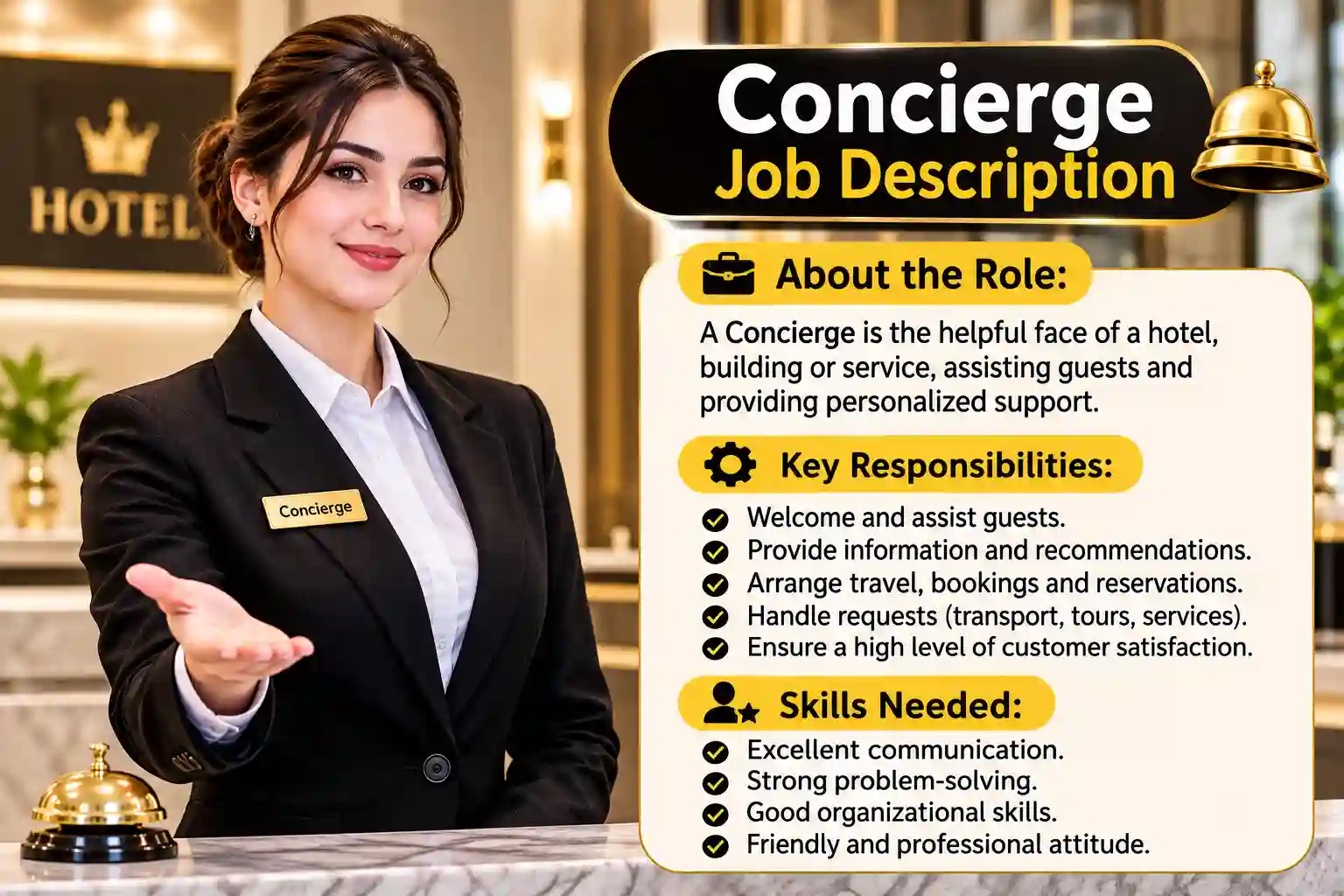
A concierge helps guests, residents, and visitors with their daily needs. They welcome people, answer questions, arrange reservations, provide local recommendations, and handle special requests. Concierges work in hotels, resorts, luxury apartments, hospitals, senior living communities, cruise ships, and office buildings.
A clear concierge job description explains the duties, responsibilities, skills, qualifications, and work expectations for this position. Employers can use it to find suitable candidates, while job seekers can use it to understand the role and prepare for interviews.
What Is a Concierge?
A concierge is a customer service professional who helps guests, residents, and visitors receive the information and assistance they need. They are often the first point of contact when someone enters a hotel, residential building, or other establishment.

The main goal of a concierge is to provide helpful and professional service. They may arrange transportation, book restaurant reservations, recommend local attractions, manage deliveries, and solve customer problems.
Concierges also work with other employees, such as receptionists, housekeeping staff, maintenance workers, security teams, and guest services managers.
Concierge Job Description Template
Employers can use this sample concierge job description when advertising an open position.
Job Title: Concierge
Job Type: Full-Time or Part-Time
Job Summary:
We are looking for a friendly, organized, and professional concierge to welcome guests, answer questions, and provide excellent customer service. The successful candidate will assist with reservations, transportation, local recommendations, deliveries, and other guest requests.
The ideal applicant should have strong communication skills, a positive attitude, and the ability to manage several tasks at once. Previous experience in hospitality, front desk operations, or customer service is helpful but may not be required for entry-level positions.
Key Responsibilities:
- Welcome guests, residents, and visitors.
- Answer questions and provide helpful information.
- Arrange restaurant reservations and appointments.
- Organize transportation, tours, and local activities.
- Handle guest complaints and find suitable solutions.
- Receive and distribute mail, luggage, and parcels.
- Answer telephone calls and respond to emails.
- Coordinate with housekeeping, maintenance, and security teams.
- Maintain accurate records of guest requests.
- Follow workplace policies and safety procedures.
Required Qualifications:
- High school diploma or equivalent.
- Strong verbal and written communication skills.
- Good customer service and organizational abilities.
- Basic computer knowledge.
- Ability to remain calm in busy situations.
- Previous hospitality experience is preferred but not always required.
Concierge Job Description Responsibilities
The daily responsibilities of a concierge depend on the workplace. However, most positions involve welcoming people, managing requests, providing information, and solving customer problems.
1. Welcome Guests and Visitors
A concierge greets guests when they arrive and makes them feel comfortable. They may provide directions, explain available facilities, answer questions, and help visitors find the correct department.
In a hotel, this may include helping guests during check-in. In a residential building, the concierge may welcome residents, visitors, and contractors.
2. Manage Reservations and Bookings
Concierges often help guests arrange restaurant reservations, appointments, tours, and event tickets. They may contact local businesses, check availability, and confirm booking details.
Good organization is important because incorrect reservations can create problems for guests and employers.
3. Arrange Transportation and Travel
Some guests need help arranging taxis, airport transfers, private drivers, or other transportation services. A concierge may also coordinate sightseeing tours and provide information about nearby travel options.
4. Provide Local Recommendations
A concierge should understand the surrounding area and know about useful local services.
They may recommend:
- Restaurants and cafes.
- Shopping centers and local stores.
- Tourist attractions and entertainment venues.
- Public transportation and taxi services.
- Local events and sightseeing tours.
- Recreational activities and popular destinations.
Building professional relationships with local businesses can help concierges provide better recommendations.
5. Handle Guest Complaints
Guests may experience booking problems, delays, missing deliveries, or service issues. A concierge listens carefully, understands the problem, and tries to find a suitable solution.
They may also contact a supervisor or another department when an issue requires additional support.
6. Manage Messages, Mail, and Deliveries
In hotels and residential buildings, concierges may receive messages, luggage, mail, parcels, and other deliveries. They organize these items and make sure they reach the correct person.
They may also answer telephone calls, respond to emails, and pass important messages to staff members.
7. Coordinate With Other Departments
Concierges work with housekeeping, maintenance, front desk staff, security teams, and building managers.
For example, if a guest reports a problem with their room, the concierge may contact housekeeping or maintenance to arrange assistance.
8. Maintain Records and Complete Administrative Tasks
Some concierge positions include basic office and reception duties. These may involve updating databases, recording guest requests, managing appointment schedules, preparing reports, and maintaining accurate information.
Confidentiality is also important when handling personal details, resident information, or guest records.
Types of Concierge Jobs
Concierge responsibilities change depending on the industry and workplace. Here are some common types of concierge positions.

Hotel Concierge Job Description
A hotel concierge assists guests during their stay. They provide local recommendations, arrange restaurant reservations, book transportation, organize tours, and respond to guest requests.
They may also work with hotel receptionists, housekeeping teams, and guest services managers to improve the guest experience.
Residential Concierge Job Description
A residential concierge works in apartment complexes, luxury buildings, and residential communities. They welcome residents and visitors, receive parcels, manage access requests, and answer questions about building services.
Some positions also involve handling keys, monitoring visitor access, reporting maintenance concerns, and following building security procedures.
Front Desk Concierge Job Description
A front desk concierge works at the reception area of a hotel, office, or residential building. They greet visitors, answer calls, provide information, manage appointments, and direct people to the correct departments.
This role combines customer service with basic administrative and reception responsibilities.
Luxury Concierge Job Description
A luxury concierge provides personalized services to guests and clients who expect a high standard of service. Responsibilities may include arranging private transportation, booking exclusive restaurants, organizing special events, and handling personal requests.
Professional communication, discretion, and attention to detail are especially important in this position.
Hospital Concierge Job Description
A hospital concierge helps patients, visitors, and families find their way around a healthcare facility. They may provide directions, explain general services, assist with visitor questions, and contact the appropriate hospital department.
They do not replace medical professionals or provide medical advice.
Senior Living Concierge Job Description
A senior living concierge supports residents in retirement communities and senior living facilities. They may help arrange transportation, schedule activities, receive deliveries, answer questions, and coordinate services.
Respect, patience, clear communication, and confidentiality are important in this environment.
Cruise Ship Concierge Job Description
A cruise ship concierge assists passengers during their journey. They may arrange shore excursions, answer questions about onboard facilities, manage reservations, and help passengers with special requests.
They often work with guest services and other onboard departments.
Spa Concierge Job Description
A spa concierge welcomes clients, manages appointments, explains available services, and helps guests prepare for treatments. They may also handle payments, answer questions, and coordinate with spa staff.
Corporate Concierge Job Description
A corporate concierge works in an office building or business environment. They may welcome visitors, arrange meeting rooms, manage deliveries, provide building information, and help employees with general requests.
Essential Concierge Skills
A successful concierge needs a combination of communication, organization, customer service, and problem-solving skills.
Communication Skills
Concierges communicate with guests, residents, visitors, and coworkers throughout the day. They should speak clearly, listen carefully, and provide accurate information.
Customer Service Skills
Good customer service helps create a positive experience. A concierge should be friendly, respectful, patient, and willing to assist people with different needs.
Problem-Solving Skills
Unexpected situations can happen at any time. A concierge should understand the problem, consider available options, and provide a practical solution.
Time Management
Concierges may handle several requests at once. Good time management helps them complete tasks without unnecessary delays.
Organization
Organization is important when managing reservations, appointments, messages, deliveries, and records.
Multitasking
A concierge may answer telephone calls while helping visitors and coordinating with other departments. The ability to manage multiple responsibilities is useful in busy workplaces.
Computer Skills
Basic computer knowledge helps concierges use email, spreadsheets, databases, and reservation management systems.
Attention to Detail
Small mistakes in bookings, schedules, or guest information can create problems. Attention to detail helps prevent these mistakes.
Concierge Qualifications and Requirements
Most entry-level concierge positions require a high school diploma or equivalent. However, education and experience requirements depend on the employer and type of workplace.

Common qualifications include:
- High school diploma or GED.
- Previous customer service or hospitality experience.
- Strong written and verbal communication.
- Basic computer literacy.
- Knowledge of Microsoft Word and Excel.
- Familiarity with email and database systems.
- Ability to manage multiple tasks.
- Professional appearance and positive attitude.
- Flexibility to work evenings, weekends, or shifts when required.
Some employers prefer candidates with hotel front desk, guest services, reception, or hospitality experience.
A hospitality management degree can provide useful knowledge, but a college degree is not always required for entry-level concierge jobs. Additional training or relevant certifications may help candidates develop their professional skills.
Concierge Software and Tools
Concierges may use different tools to manage guest requests and daily operations. The exact software depends on the workplace.
Common tools include:
- Reservation Management Systems: Used to manage bookings, appointments, and guest requests.
- Property Management Systems (PMS): Help hotels manage guest information, room bookings, and front desk operations.
- Microsoft Office: Word and Excel can help with documents, schedules, and records.
- Email Platforms: Used to communicate with guests, residents, and staff.
- Telephone Systems: Help answer calls and transfer messages.
- Database Systems: Store and update important information.
- Security Systems: May include access control, security intercoms, and CCTV monitoring in certain residential positions.
A concierge should learn the systems used by their employer and follow workplace data privacy and security policies.
How to Become a Concierge
You can start a concierge career by developing customer service skills and gaining experience in a related position.
1. Complete Your Basic Education
A high school diploma or GED is a common starting requirement. Some employers may prefer additional hospitality education.
2. Develop Customer Service Skills
Practice communication, problem-solving, organization, and professional behavior. These skills are useful when helping guests and handling complaints.
3. Gain Relevant Experience
You can gain experience through positions such as hotel receptionist, front desk agent, guest service representative, or customer service assistant.
Internships and entry-level hospitality jobs can also help you understand the industry.
4. Learn Computer and Reservation Systems
Become comfortable using email, spreadsheets, databases, and booking systems. These tools are common in hotel and residential concierge environments.
5. Consider Professional Training
Hospitality courses and relevant professional certifications may help you improve your knowledge of guest services, communication, and hotel operations.
6. Apply for Entry-Level Positions
Look for openings in hotels, resorts, apartment buildings, hospitals, and other service-focused workplaces. Adjust your resume to highlight relevant customer service and communication experience.
Concierge Job Description for Resume
When writing a concierge resume, focus on duties and achievements that show your ability to help guests and manage daily tasks.
Example Concierge Resume Summary
Friendly and organized concierge with experience providing excellent customer service, managing guest requests, arranging reservations, and solving problems. Skilled in communication, time management, and coordinating with different departments to create a positive guest experience.
Example Concierge Resume Responsibilities
- Welcomed guests and visitors in a professional manner.
- Managed reservations, appointments, and transportation requests.
- Provided information about local attractions and services.
- Responded to customer complaints and resolved service issues.
- Coordinated with housekeeping and maintenance teams.
- Managed incoming calls, emails, messages, and deliveries.
- Maintained accurate records and protected confidential information.
Concierge Job Description for Resume With No Experience
If you have no previous concierge experience, focus on transferable skills from school, volunteering, internships, retail, or other customer-facing activities.
Example Resume Summary With No Experience
Motivated and friendly entry-level candidate with strong communication, organization, and problem-solving skills. Eager to begin a concierge career and provide helpful service to guests and visitors. Able to learn new systems, manage responsibilities, and work well with a team.
You can also mention experience with:
- Helping customers or visitors.
- Answering questions and providing directions.
- Using computers and email.
- Organizing schedules and activities.
- Working with classmates or team members.
- Handling responsibilities in a polite and reliable way.
Concierge Career Path and Growth Opportunities
A concierge career can lead to different opportunities within hospitality, property management, and customer service.
A possible career path may look like this:
- Entry-Level Concierge
- Hotel or Residential Concierge
- Senior Concierge
- Head Concierge
- Guest Services Supervisor
- Guest Services Manager
- Front Office Manager
- Hospitality Operations Manager
Career progression depends on experience, workplace size, performance, and available opportunities. Some concierges also move into event coordination, lodging management, or other hospitality roles.
Concierge vs. Receptionist: What Is the Difference?
Concierges and receptionists both welcome visitors and provide information, but their responsibilities are not always the same.
| Concierge | Receptionist |
| Focuses on guest and resident assistance. | Focuses on reception and administrative tasks. |
| Arranges transportation and reservations. | Answers calls and manages appointments. |
| Provides local recommendations. | Directs visitors to the correct person or department. |
| Handles special guest requests. | Manages messages and basic office records. |
| Often works in hotels and residential buildings. | Works in offices, clinics, hotels, and other workplaces. |
Some workplaces combine both positions, so responsibilities may overlap.
A Day in the Life of a Concierge
A concierge’s daily routine depends on the workplace and shift. However, a typical day may include several common tasks.
At the Start of the Shift: The concierge checks messages, reviews pending requests, reads shift notes, and prepares the reception area.
During the Day: They welcome guests, answer questions, manage reservations, arrange transportation, receive deliveries, and coordinate with other departments.
When Problems Occur: They listen to complaints, contact the relevant staff, and follow up to make sure problems are handled.
At the End of the Shift: They update records, complete pending tasks, organize important information, and pass unfinished requests to the next employee.
Common Challenges Faced by Concierges
Concierge work can be rewarding, but it also comes with challenges.
- Difficult Guests: Some guests may be unhappy or upset. A concierge should remain calm and professional.
- Busy Periods: Several people may need help at the same time. Good organization and time management are important.
- Last-Minute Requests: Sudden booking or transportation changes require flexibility.
- Communication Problems: Clear communication helps prevent misunderstandings between guests and staff.
- Confidential Information: Concierges must protect private guest and resident details.
- Unexpected Situations: Delays, missing deliveries, and service problems require quick and careful responses.
Concierge Performance Expectations
Employers may evaluate concierge performance through several areas.

- Guest satisfaction and service quality.
- Professional communication.
- Accuracy of reservations and records.
- Response time for guest requests.
- Ability to solve problems.
- Attendance and punctuality.
- Teamwork and cooperation.
- Compliance with workplace policies.
Meeting these expectations helps maintain service standards and creates a positive experience for guests and residents.
Frequently Asked Questions
A concierge welcomes guests, answers questions, manages reservations, arranges transportation, provides local recommendations, and handles special requests.
The main responsibilities include greeting visitors, managing bookings, answering calls, handling complaints, coordinating deliveries, and providing helpful customer service.
Most entry-level positions require a high school diploma or equivalent. Employers may also look for communication, computer, organization, and customer service skills.
Yes. Concierge work can be an entry point into hospitality and customer service. Some employers accept candidates without previous concierge experience if they have suitable transferable skills.
Communication, customer service, problem-solving, time management, organization, teamwork, and attention to detail are important skills.
Some do. Hotels and residential buildings may need concierge staff during evenings, overnight hours, weekends, and holidays.
A hotel concierge mainly helps temporary guests with reservations, transportation, and local recommendations. A residential concierge supports residents with deliveries, visitor access, building information, and everyday requests.
Yes. Many entry-level concierge positions do not require a college degree. A high school diploma, relevant skills, and customer service experience may be enough.
Concierge salaries depend on the country, location, employer, experience, and type of workplace. Hotel, luxury, and residential positions may offer different pay and benefits.
Depending on the workplace, similar job titles include guest services representative, guest relations assistant, front desk concierge, residential concierge, and guest services agent.
Final Thoughts
A concierge plays an important role in creating a welcoming and helpful environment for guests, residents, and visitors. The job includes customer service, reservations, transportation arrangements, complaint handling, administrative work, and communication with other departments.
A strong concierge job description should clearly explain the duties, skills, qualifications, and work expectations. Whether you are an employer creating a job advertisement or a candidate preparing for a new career, understanding these responsibilities can help you make better decisions.

Ryan Mitchell writes job descriptions, role overviews and general description guides in plain, easy-to-follow language. He focuses on listing duties, skills and requirements clearly, so readers can understand a role or topic without wading through jargon.