

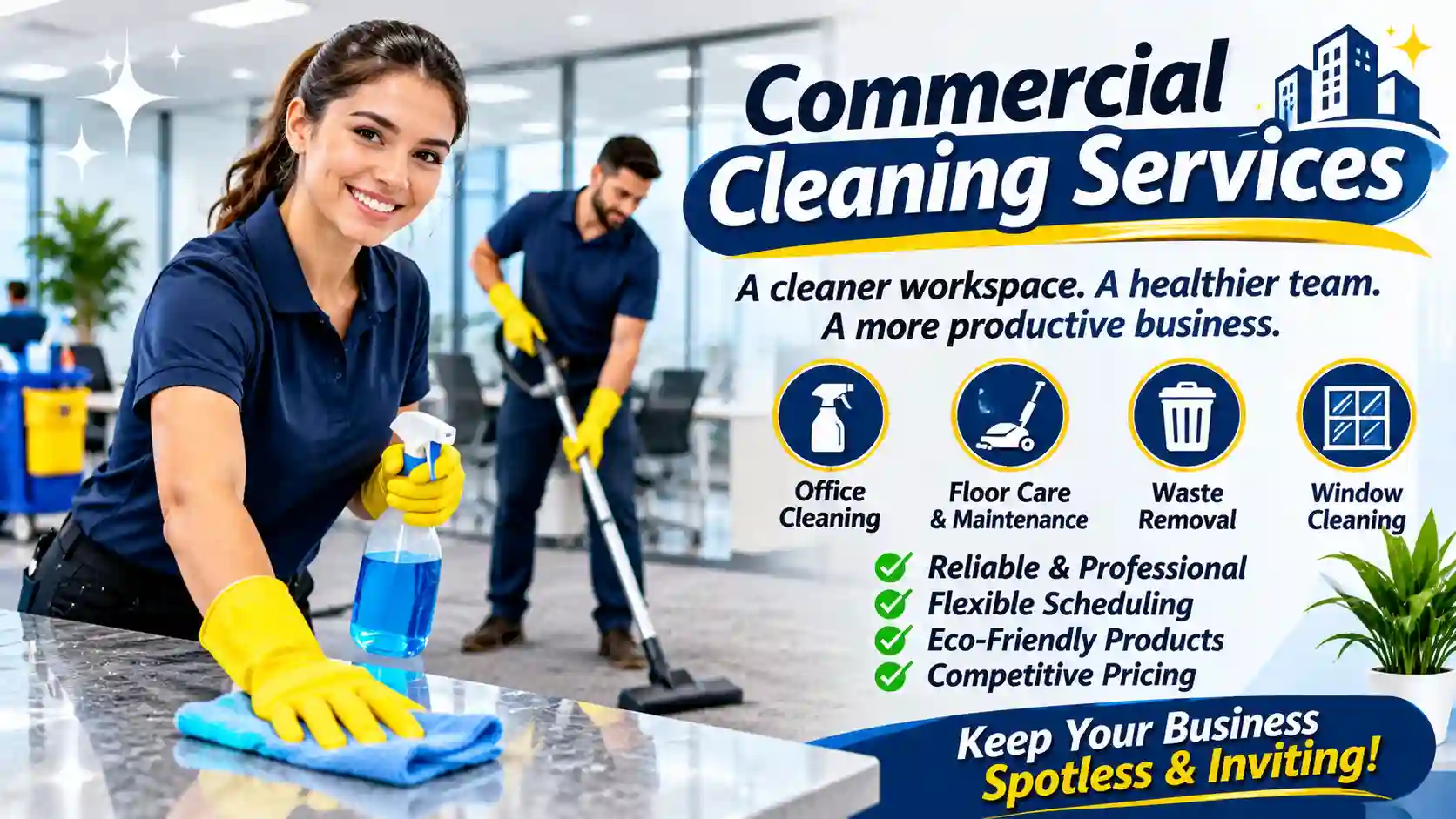
Commercial cleaning services help businesses maintain clean, safe, and comfortable workplaces. These services include dusting, vacuuming, mopping, restroom cleaning, window washing, floor care, disinfection, and trash removal.
A professional commercial cleaning services description explains what a cleaning company offers, which areas it cleans, and how its services help businesses maintain a healthy environment.
Whether you own a cleaning company, manage an office, or need a description for your business website, understanding different cleaning services can help you explain your solutions clearly.
What Are Commercial Cleaning Services?
Commercial cleaning services are professional cleaning solutions designed for businesses, institutions, and other non-residential properties. These services help maintain cleanliness in offices, schools, hospitals, retail stores, restaurants, warehouses, and manufacturing facilities.
Unlike residential cleaning, which focuses on homes and apartments, commercial cleaning involves larger spaces, higher foot traffic, and different hygiene requirements.
Professional cleaning companies use trained employees, specialized equipment, cleaning agents, and suitable procedures to maintain workplace cleanliness.
Common commercial cleaning services include:
- Office and janitorial cleaning
- Floor cleaning and maintenance
- Carpet and upholstery cleaning
- Window washing
- Restroom cleaning and disinfection
- High dusting
- Pressure washing
- Tile and grout cleaning
- Post-construction cleaning
- Waste removal
- Specialized healthcare and industrial cleaning
Businesses can arrange these services daily, weekly, monthly, or according to their facility requirements.

Commercial Cleaning Services Description Example
A commercial cleaning services description should explain your company’s cleaning solutions in simple words. It should tell customers what you clean, how you work, and why they should choose your services.
Example:
“We provide professional commercial cleaning services for offices, schools, retail stores, warehouses, healthcare facilities, and other business properties. Our services include dusting, vacuuming, floor maintenance, restroom sanitization, window washing, carpet cleaning, and waste removal. Our goal is to create clean, fresh, and comfortable workplaces through reliable cleaning solutions. We offer flexible cleaning schedules to meet the needs of every business.”
You can use this description on your website, business profile, service page, or marketing materials.
Small Commercial Cleaning Services Description
A small cleaning business needs a short and clear description to explain its services to potential customers.
Example:
“We offer affordable and reliable commercial cleaning services for small offices, shops, and local businesses. Our cleaning solutions include dusting, mopping, vacuuming, restroom cleaning, floor care, and trash removal. We focus on keeping your workplace neat, fresh, and welcoming.”
Small cleaning companies can also mention their service areas, working hours, cleaning packages, and customized solutions.
Types of Commercial Cleaning Services
Commercial cleaning includes different types of cleaning tasks. Each service focuses on a particular area or cleaning requirement.
1. Office Cleaning
Office cleaning keeps workplaces neat, organized, and comfortable for employees and visitors.
Common office cleaning tasks include:
- Dusting desks, chairs, and shelves.
- Vacuuming carpets and rugs.
- Mopping hard surface floors.
- Cleaning doors and windows.
- Emptying waste bins.
- Disinfecting frequently touched surfaces.
- Cleaning meeting rooms and reception areas.
Regular office cleaning helps create a pleasant working environment.
2. Floor Cleaning and Maintenance
Floor cleaning removes dirt, dust, stains, and marks from different flooring materials.
Professional floor care may include:
- Sweeping and mopping.
- Machine scrubbing.
- Floor stripping and waxing.
- Buffing and polishing.
- Carpet maintenance.
- Tile and grout cleaning.
- Hard surface floor maintenance.
Different flooring materials require different cleaning methods. Proper floor maintenance helps protect surfaces and improve the appearance of commercial buildings.
3. Carpet and Upholstery Cleaning
Commercial carpet cleaning removes dust, stains, odors, and trapped dirt from carpets in offices and other business spaces.
Common methods include vacuuming, steam cleaning, hot water extraction, and spot treatment.
Upholstery cleaning focuses on furniture such as office chairs, sofas, and fabric-covered seating. Professional cleaning helps remove accumulated dirt and maintain the appearance of workplace furniture.
4. Window Cleaning
Window cleaning removes dust, fingerprints, watermarks, and other dirt from glass surfaces.
Commercial window cleaning may include:
- Interior window cleaning.
- Exterior window washing.
- Glass door cleaning.
- Window frame cleaning.
- Glass partition cleaning.
High-rise window cleaning requires trained professionals, suitable equipment, and appropriate fall protection.
5. Restroom Cleaning and Disinfection
Restroom cleaning is an important part of commercial cleaning services. It helps maintain hygiene and creates a comfortable experience for employees and customers.
Typical restroom cleaning tasks include:
- Cleaning toilets and urinals.
- Washing sinks and countertops.
- Disinfecting door handles and faucets.
- Cleaning mirrors.
- Mopping floors.
- Emptying waste bins.
- Refilling soap and paper supplies.
6. High Dusting
High dusting involves removing dust and debris from elevated surfaces that are difficult to reach during regular cleaning.
These areas may include:
- Ceiling fixtures.
- Air vents.
- High shelves.
- Light fittings.
- Exposed beams.
- High-level pipes.
Warehouses, factories, large offices, and commercial buildings may need scheduled high dusting to maintain cleaner indoor environments.
7. Pressure Washing
Pressure washing uses specialized equipment to remove dirt, stains, and buildup from suitable exterior surfaces.
Common applications include:
- Building exteriors.
- Sidewalks.
- Parking areas.
- Driveways.
- Outdoor entrances.
- Loading areas.
The cleaning method and pressure level should match the surface to avoid damage.
8. Deep Cleaning Services
Deep cleaning focuses on areas that may not receive attention during regular cleaning.
It includes detailed cleaning of floors, corners, furniture, walls, fixtures, and other surfaces.
Businesses often schedule deep cleaning periodically or when a workplace needs additional attention.
9. Kitchen and Breakroom Cleaning
Commercial kitchens and office breakrooms need regular cleaning to maintain hygiene.
These services may include cleaning tables, countertops, sinks, kitchen appliances, and floors, as well as removing food waste.
Restaurants and food preparation facilities may require additional sanitation procedures.
10. Trash Removal and Waste Management
Trash removal involves collecting and disposing of everyday waste from commercial properties.
Professional cleaners empty waste bins, replace garbage bags, and take waste to designated disposal areas.
Some facilities may also require separate waste collection procedures and specialized hazardous waste handling by appropriately trained personnel.
Commercial Cleaning Examples by Industry
Different industries have different cleaning requirements. A commercial cleaning company may customize its services according to the type of facility, number of visitors, and daily activities.
| Commercial Facility | Common Cleaning Requirements |
| Offices | Dusting, vacuuming, mopping, and restroom cleaning |
| Hospitals | Surface disinfection and specialized healthcare cleaning |
| Schools | Classroom cleaning, floor care, and waste removal |
| Restaurants | Kitchen, dining area, and restroom cleaning |
| Hotels | Lobby, guest areas, hallways, and common area cleaning |
| Warehouses | High dusting, floor cleaning, and waste collection |
| Fitness Centers | Equipment cleaning and restroom sanitization |
| Retail Stores | Floor maintenance, window washing, and dusting |
| Auto Dealerships | Showroom floor care and glass cleaning |
| Government Buildings | Office cleaning and facility maintenance |
| Financial Institutions | Office, lobby, and customer area cleaning |
| Veterinary Offices | Cleaning and disinfection of suitable surfaces |
| Museums and Entertainment Venues | Public area and floor maintenance |
| Places of Worship | Seating area, floor, and restroom cleaning |
Healthcare facilities may require specialized infection prevention procedures, while industrial buildings may need equipment cleaning and grease removal.
What Is Industrial Cleaning?
Industrial cleaning refers to specialized cleaning services performed in factories, manufacturing facilities, warehouses, and industrial workplaces.
These environments may contain heavy dirt, grease, oil, dust, and other industrial waste.
Industrial cleaning can include:
- Machinery cleaning.
- Factory floor cleaning.
- Equipment degreasing.
- Industrial waste removal.
- High-pressure washing.
- Ventilation system cleaning.
- Specialized dust removal.
Industrial cleaning may require specialized equipment, protective clothing, chemical safety procedures, and trained workers.
What Is Custodial Cleaning?
Custodial cleaning is routine cleaning and basic facility maintenance performed in buildings such as schools, offices, hospitals, and public facilities.
Custodians help keep indoor spaces clean, safe, and organized.
Their responsibilities may include:
- Sweeping and mopping floors.
- Cleaning restrooms.
- Emptying trash bins.
- Dusting furniture.
- Cleaning hallways.
- Replacing basic supplies.
- Reporting maintenance problems.
Custodial cleaning is often performed according to a daily or weekly schedule.
What Is Residential Cleaning?
Residential cleaning refers to professional cleaning services provided for houses, apartments, and other living spaces.
It focuses on maintaining a clean and comfortable home environment.
Common residential cleaning tasks include:
- Bedroom cleaning.
- Kitchen cleaning.
- Bathroom cleaning.
- Dusting furniture.
- Vacuuming carpets.
- Mopping floors.
- Washing windows.
The main difference is that residential cleaning focuses on homes, while commercial cleaning focuses on business properties.
What Is Post-Construction Cleaning?
Post-construction cleaning is performed after building, renovation, or remodeling work.
Construction projects often leave behind dust, debris, paint marks, and other materials that need to be removed before a property is ready for use.
Post-construction cleaning usually includes:
- Removing construction dust.
- Cleaning windows and glass.
- Removing stickers and labels.
- Cleaning floors and walls.
- Removing leftover materials.
- Cleaning kitchens and bathrooms.
- Wiping doors, cabinets, and fixtures.
This service helps prepare newly built or renovated spaces for employees, customers, and residents.
What Is Housekeeping Management?
Housekeeping management is the process of planning, organizing, and supervising cleaning activities to maintain clean and organized buildings.
In commercial facilities, housekeeping management may include:
- Creating daily cleaning schedules.
- Assigning tasks to cleaning employees.
- Managing cleaning supplies and equipment.
- Monitoring workplace cleanliness.
- Inspecting completed cleaning tasks.
- Training cleaning staff.
- Following health and safety procedures.
Good housekeeping management helps businesses maintain consistent cleaning standards and use their cleaning resources effectively.

Commercial Cleaning Services Job Description
A commercial cleaner is responsible for keeping business properties clean and organized. Their work helps maintain a healthy and pleasant environment for employees, visitors, and customers.
Main Duties and Responsibilities
A commercial cleaner may perform the following duties:
- Clean offices, hallways, and common areas.
- Sweep, mop, and vacuum floors.
- Dust furniture and other surfaces.
- Clean restrooms and kitchen areas.
- Empty trash bins and remove waste.
- Disinfect frequently touched surfaces.
- Refill soap and paper supplies.
- Use cleaning tools and equipment safely.
- Follow workplace health and safety rules.
- Report damaged equipment or maintenance issues.
Commercial and Residential Cleaning Services Job Description
A cleaner who works in both commercial and residential environments may perform different duties depending on the property.
Commercial responsibilities include office cleaning, restroom maintenance, floor care, and waste removal.
Residential responsibilities include bedroom cleaning, kitchen cleaning, bathroom cleaning, dusting, vacuuming, and general home maintenance.
Both roles require attention to detail, time management, safe cleaning practices, and good communication skills.
Skills Required for Commercial Cleaners
Important skills include:
- Time management.
- Attention to detail.
- Communication skills.
- Physical fitness.
- Teamwork.
- Knowledge of cleaning products.
- Safe equipment handling.
- Organization.
Previous cleaning experience can be helpful, but some companies provide training to new employees.
What Is Commercial Cleaning Experience?
Commercial cleaning experience means having practical knowledge of cleaning business properties such as offices, schools, retail stores, and other workplaces.
A person with commercial cleaning experience may know how to operate cleaning machines, maintain floors, sanitize restrooms, remove waste, and follow workplace safety procedures.
This experience can help cleaners understand different cleaning requirements and complete their responsibilities efficiently.
Commercial Cleaning Standards and Infection Prevention
Commercial cleaning standards help businesses maintain consistent cleanliness and hygiene across their facilities.

Cleaning companies may use documented procedures, staff training, inspection checklists, and appropriate cleaning products to support their work.
Important areas include:
- Infection Prevention and Control: Cleaning and disinfection procedures help reduce the spread of harmful microorganisms.
- CDC Guidance: Healthcare and other facilities may use relevant Centers for Disease Control and Prevention guidance when developing cleaning procedures.
- OSHA Safety Requirements: Occupational Safety and Health Administration requirements are relevant to worker safety, including chemical handling and workplace hazards.
- Standard Operating Procedures: Written procedures help employees complete cleaning tasks consistently.
- Chemical Management: Proper product selection, labeling, storage, and handling help support workplace safety.
The Global Biorisk Advisory Council (GBAC), a division of ISSA, offers the GBAC STAR Facility Accreditation program. It focuses on cleaning, disinfection, infection prevention, staff training, and facility preparedness.
The Cleaning Industry Management Standard (CIMS) is another industry framework that addresses the management and quality of cleaning organizations.
These programs and standards can help businesses evaluate cleaning practices and service providers.
Green Commercial Cleaning and Sustainability
Green cleaning focuses on cleaning practices that consider environmental impact while maintaining suitable cleanliness and hygiene.
Commercial cleaning companies may use:
- Environmentally preferable cleaning products.
- Microfiber cleaning materials.
- Efficient water usage.
- Energy-efficient equipment.
- Responsible waste management.
- Appropriate chemical storage and handling.
Sustainable cleaning practices can help businesses reduce unnecessary waste and improve resource management.
Commercial Cleaning Technology and Equipment
Modern commercial cleaning companies may use specialized machines and digital tools to improve cleaning efficiency.
Common cleaning equipment includes:
- Industrial vacuum cleaners.
- Automatic floor scrubbers.
- Floor polishers.
- Pressure washers.
- Carpet extraction machines.
- Steam cleaning equipment.
- High-dusting tools.
- Microfiber cleaning systems.
Some larger facilities also use robotics, sensors, and digital management tools to monitor cleaning tasks and organize schedules.
Technology can support cleaning operations, but trained employees are still important for inspections, detailed cleaning, and handling special requirements.
Commercial Cleaning Description for a Business
A professional commercial cleaning description should clearly explain the services offered by a cleaning company.
Example:
“Our commercial cleaning company provides dependable cleaning solutions for offices, retail spaces, schools, healthcare facilities, and other business properties. We offer regular janitorial cleaning, floor maintenance, carpet care, restroom disinfection, window washing, and customized cleaning schedules. Our aim is to help businesses maintain clean and welcoming environments.”
A good commercial cleaning company description should include:
- Company introduction.
- Main cleaning services.
- Types of properties served.
- Service locations.
- Cleaning schedules.
- Professional cleaning methods.
- Contact information.
Janitorial Services Description
A janitorial services description explains routine cleaning and maintenance tasks performed in commercial buildings.
Janitorial services commonly include sweeping, mopping, vacuuming, dusting, restroom cleaning, trash removal, and disinfecting frequently touched surfaces.
These services help offices, schools, retail stores, and other facilities remain clean and organized.
Commercial Cleaning Scope of Work
A commercial cleaning scope of work explains which tasks a cleaning company will perform, which areas are included, and how frequently services will be provided.
A typical scope of work may include:
- Cleaning offices and common areas.
- Vacuuming carpets and mopping floors.
- Cleaning and disinfecting restrooms.
- Emptying waste bins.
- Cleaning kitchen and breakroom surfaces.
- Cleaning interior glass and windows.
- Performing scheduled deep cleaning.
- Completing quality inspections.
A written scope of work helps customers and cleaning providers understand their responsibilities before a service agreement begins.
How Much Do Commercial Cleaners Charge?
Commercial cleaning prices depend on several factors. Every property has different cleaning requirements, so companies usually provide quotes based on the size and condition of the building.

Common pricing factors include:
- Size of the property.
- Number of rooms.
- Type of cleaning required.
- Cleaning frequency.
- Number of workers needed.
- Cleaning supplies and equipment.
- Location of the business.
Some cleaning companies charge by the hour, while others provide fixed prices for individual cleaning projects or ongoing contracts.
How Much Do Commercial Cleaners Charge Per Hour?
Hourly commercial cleaning rates vary depending on location, type of work, labor costs, and service requirements.
Basic office cleaning may cost less than specialized services such as industrial cleaning, carpet extraction, or high-rise window washing.
Businesses should request written estimates from multiple cleaning companies to compare their services and pricing.
Commercial Cleaning Services in the USA
Businesses looking for commercial cleaning services in the USA can find providers offering different solutions for offices, schools, healthcare facilities, retail stores, and industrial buildings.
When comparing commercial cleaning companies in the USA, consider their experience, available services, cleaning schedules, insurance, staff training, and customer reviews.
Service availability and pricing vary by city and region. Businesses should choose a provider that understands their property requirements and can offer a suitable cleaning plan.
Online Estimates for Commercial Cleaning Services
Many cleaning companies offer online estimates to help businesses understand the potential cost of their cleaning requirements.
When requesting an online estimate, customers may need to provide:
- Property address or service location.
- Building size.
- Number of rooms and restrooms.
- Type of cleaning required.
- Preferred cleaning frequency.
- Special cleaning requirements.
A detailed estimate helps both the customer and cleaning company understand the expected work and costs before starting a service agreement.

How to Choose a Commercial Cleaning Company
Choosing the right cleaning company is important for maintaining your business property.
Consider these factors before hiring a service provider:
- Experience: Look for a company with experience in commercial properties.
- Available Services: Make sure it offers the cleaning tasks your business needs.
- Trained Staff: Ask about employee training and cleaning procedures.
- Insurance: Check whether the company has suitable insurance coverage.
- Cleaning Products: Ask which products and equipment it uses.
- Certifications: Check relevant training, industry credentials, and accreditation where applicable.
- Flexible Scheduling: Choose a provider that can work around your business hours.
- Quality Inspections: Ask how the company checks completed cleaning tasks.
- Written Estimates: Request clear pricing and service details before signing an agreement.
A reliable cleaning company should understand your requirements and provide a suitable cleaning plan.
Frequently Asked Questions
A commercial cleaning services description explains the professional cleaning solutions offered to businesses. It usually includes office cleaning, floor care, carpet cleaning, window washing, restroom cleaning, and waste removal.
Examples include office cleaning, industrial cleaning, carpet cleaning, window washing, restroom sanitization, floor maintenance, pressure washing, and deep cleaning.
Commercial cleaning focuses on business properties, offices, schools, and other non-residential buildings. Residential cleaning focuses on houses, apartments, and living spaces.
Include your company introduction, cleaning services, service areas, cleaning schedules, professional experience, and contact information.
A commercial cleaner maintains business properties by dusting, sweeping, mopping, vacuuming, cleaning restrooms, disinfecting surfaces, and removing trash.
Janitorial services usually focus on routine daily or scheduled cleaning and basic facility maintenance. Commercial cleaning is a broader term that can include routine cleaning and specialized services such as carpet cleaning, floor polishing, and window washing.
Cleaning frequency depends on the building’s size, number of visitors, business activities, and hygiene requirements. Some workplaces need daily cleaning, while others may require weekly or monthly services.
Green commercial cleaning uses cleaning methods and products that consider environmental impact while maintaining suitable hygiene and cleanliness standards.
GBAC STAR is a facility accreditation program developed by the Global Biorisk Advisory Council. It focuses on cleaning, disinfection, infection prevention, and facility preparedness.
Commercial cleaning generally covers business properties such as offices, schools, and retail stores. Industrial cleaning focuses on specialized environments such as factories and manufacturing facilities, where machinery, grease, and industrial waste may require additional cleaning procedures.
It should include the areas to be cleaned, specific cleaning tasks, service frequency, responsibilities, equipment requirements, and quality inspection procedures.
You can describe it by mentioning your main services, the types of businesses you serve, your cleaning schedule, and your commitment to maintaining clean and comfortable workplaces.
Final Thoughts
Commercial cleaning services play an important role in maintaining clean, organized, and comfortable business environments. These services include office cleaning, floor maintenance, carpet and upholstery cleaning, window washing, restroom disinfection, pressure washing, and waste removal.
Understanding different cleaning categories, industry requirements, cleaning standards, equipment, and housekeeping management helps businesses choose suitable cleaning solutions.

Ryan Mitchell writes job descriptions, role overviews and general description guides in plain, easy-to-follow language. He focuses on listing duties, skills and requirements clearly, so readers can understand a role or topic without wading through jargon.