

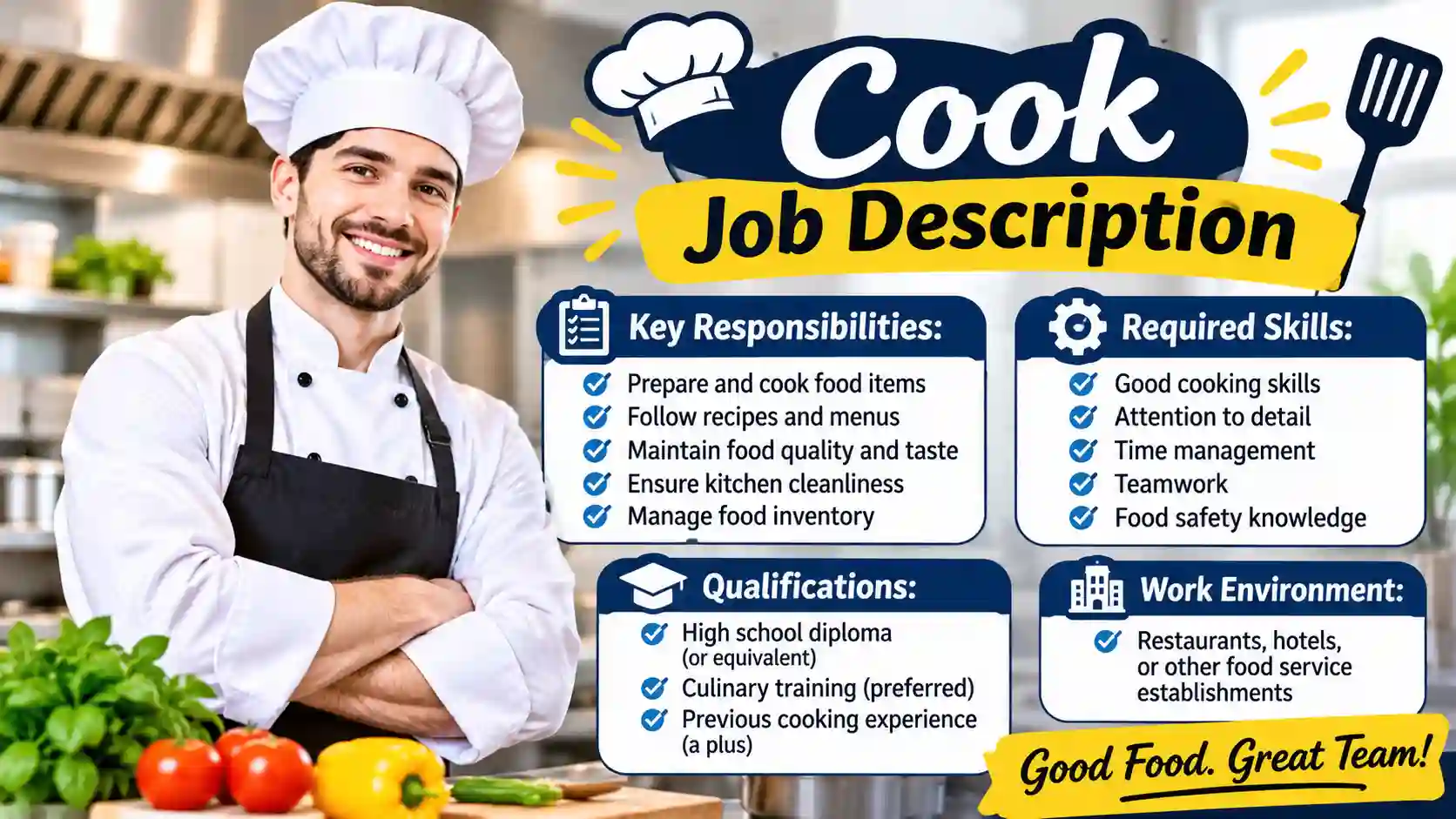
A cook prepares delicious and safe meals for customers, guests, patients, or employees. Cooks work in restaurants, hotels, hospitals, schools, cafeterias, catering companies, and other food service businesses. Their main responsibilities include preparing ingredients, following recipes, cooking food, maintaining kitchen cleanliness, and serving meals on time.
A clear cook job description helps employers find the right candidates and helps job seekers understand what the position requires. It explains the daily duties, necessary cooking skills, qualifications, work environment, and expectations.
In this guide, you will learn what a cook does, the skills needed for the job, different types of cooks, and how to create an effective job description.
What Is a Cook?

A cook is a food service professional who prepares and cooks meals using different ingredients, recipes, and cooking methods. They may work independently or as part of a kitchen team under the direction of a head cook, head chef, or kitchen manager.
Professional cooks use kitchen equipment, follow food safety standards, measure ingredients, and make sure every meal meets quality expectations.
Some cooks specialize in particular food items or cooking methods. For example, a line cook prepares meals at a specific kitchen station, while a pastry cook makes desserts, cakes, and baked goods.
Cook Job Description Sample
Employers can use the following sample when advertising a cooking position.
Job Title: Cook
Job Type: Full-Time or Part-Time
Department: Food Service / Kitchen
Reports To: Head Chef or Kitchen Manager
Job Summary:
We are looking for a skilled and dependable cook to join our kitchen team. The successful candidate will prepare meals, follow recipes, maintain food quality, and keep the kitchen clean and organized.
The cook will be responsible for preparing ingredients, operating kitchen equipment, monitoring food temperatures, and following proper food safety procedures. The ideal candidate should have good cooking skills, attention to detail, time management abilities, and the ability to work well in a busy kitchen.
Cook Duties and Responsibilities
A cook performs several tasks throughout the day to make sure food is prepared safely and served on time. Responsibilities may vary depending on the workplace and type of cooking position.
Common cook duties and responsibilities include:
- Prepare ingredients by washing, peeling, cutting, and measuring food.
- Cook meals according to recipes and customer requirements.
- Follow instructions from the head chef or kitchen manager.
- Prepare meat, poultry, fish, vegetables, and other ingredients.
- Use different cooking methods, including grilling, frying, baking, and steaming.
- Maintain food quality, taste, and presentation.
- Check food temperatures to ensure meals are safe to eat.
- Keep kitchen workstations clean and organized.
- Follow food storage and labeling procedures.
- Clean and sanitize cooking tools, utensils, and equipment.
- Monitor ingredient supplies and report low stock.
- Follow portion control guidelines.
- Work with other kitchen staff during busy service periods.
- Complete opening and closing kitchen duties.
- Follow workplace health and safety rules.
What Does a Cook Do Every Day?
A professional cook follows a daily routine that depends on the kitchen’s size, menu, and operating hours.
1. Prepare the Kitchen
At the beginning of a shift, cooks organize their workstations, check kitchen equipment, and make sure ingredients are available. They may also complete station setup before food service begins.
2. Prepare Ingredients
Cooks wash vegetables, cut meat, measure spices, prepare sauces, and organize ingredients. This process is often called food preparation or prep work.
3. Cook and Prepare Meals
During service hours, cooks prepare meals according to recipes and customer orders. They use different cooking techniques to maintain the expected taste and quality.
4. Check Food Quality
Before serving meals, cooks check food temperature, texture, appearance, and portion sizes. They also make sure dishes follow the required standards.
5. Clean the Kitchen
Cooks clean work surfaces, wash utensils, sanitize equipment, and remove waste. They follow proper kitchen hygiene practices throughout their shifts.
6. Manage Kitchen Supplies
Some cooks help check food inventory, organize ingredients, label stored products, and report items that need to be reordered.
Essential Skills Every Professional Cook Needs
Successful cooks need practical cooking abilities and personal skills to work efficiently in a professional kitchen.
Cooking Skills
Cooks should understand basic cooking methods, ingredient preparation, seasoning, and recipe instructions. They should also know how to prepare different types of meals.
Knife Skills
Knife skills help cooks cut vegetables, meat, and other ingredients safely and consistently. Proper cutting techniques also improve food preparation speed.
Time Management
Cooks often prepare several dishes at the same time. Good time management helps them complete orders without unnecessary delays.
Food Safety Knowledge
Professional cooks must understand safe food handling, food temperature control, proper storage, and kitchen sanitation.
Communication Skills
Cooks communicate with chefs, servers, kitchen assistants, and other team members to keep daily operations organized.
Teamwork
A busy kitchen requires cooperation. Cooks should support other kitchen employees and work together to complete orders.
Attention to Detail
Following recipes, measuring ingredients, checking food quality, and maintaining portion sizes require careful attention.
Physical Stamina
Cooking jobs may require standing for long periods, lifting supplies, moving around the kitchen, and working in warm environments.
Problem-Solving
Cooks should be able to handle common kitchen problems, such as missing ingredients, equipment issues, or unexpected customer orders.
Different Types of Cooks and Their Specializations
Professional cooks may work in different kitchen positions based on their experience, skills, and responsibilities.
Line Cook
A line cook prepares meals at a specific station in a restaurant kitchen. They may work on the grill, fryer, sauté, or other cooking stations.
Prep Cook
A prep cook prepares ingredients before the main cooking service begins. Their work includes washing vegetables, cutting meat, measuring ingredients, and preparing sauces.
Shift Cook
A shift cook handles cooking responsibilities during an assigned work shift. They may prepare meals, organize supplies, and maintain kitchen cleanliness.
Pantry Cook
A pantry cook prepares cold food items, salads, sandwiches, dressings, and appetizers.
Lead Cook
A lead cook helps organize kitchen activities, guide other cooks, monitor food quality, and support the head chef.
Pizza Cook
A pizza cook prepares pizza dough, adds toppings, operates ovens, and follows recipes to produce consistent pizzas.
Grill Cook
A grill cook prepares grilled food items such as meat, fish, chicken, and vegetables.
Fry Cook
A fry cook prepares fried foods using commercial fryers. They monitor cooking times, oil temperature, and food quality.
Pastry Cook
A pastry cook prepares cakes, pastries, desserts, cookies, and other baked products.
Assistant Cook
An assistant cook supports senior kitchen employees with food preparation, cooking, cleaning, and basic kitchen duties.
Kitchen Staff Positions and Their Responsibilities
A professional kitchen includes different employees who work together to prepare and serve meals.
| Kitchen Position | Main Responsibility |
| Executive Chef | Manages the overall kitchen operation and menu planning. |
| Head Chef | Supervises cooking activities and kitchen employees. |
| Sous Chef | Supports the head chef and manages daily kitchen operations. |
| Lead Cook | Guides cooks and monitors food preparation. |
| Line Cook | Prepares meals at an assigned cooking station. |
| Prep Cook | Prepares ingredients before service. |
| Pantry Cook | Makes salads, cold dishes, and appetizers. |
| Kitchen Assistant | Helps with cleaning, washing, and basic preparation. |
| Dishwasher | Cleans dishes, utensils, and kitchen equipment. |
Kitchen roles may differ depending on the size and type of food service business.
Cook Qualifications and Requirements

The qualifications for a cook depend on the employer, workplace, and level of responsibility. Some entry-level positions provide on-the-job training, while more advanced roles may require previous experience or formal culinary education.
Common cook qualifications include:
- High school diploma or equivalent education.
- Previous cooking or food service experience.
- Knowledge of basic cooking methods.
- Understanding of food safety and kitchen hygiene.
- Ability to follow recipes and instructions.
- Knowledge of kitchen equipment.
- Good communication and teamwork skills.
- Ability to work flexible hours.
- Physical ability to perform kitchen duties.
Some employers prefer candidates who have completed vocational training, culinary school, or an associate degree in culinary arts.
A food safety certification or food handler permit may also be required, depending on local regulations and employer policies.
Food Safety and Hygiene Practices for Professional Cooks
Food safety is one of the most important responsibilities in a professional kitchen. Cooks must follow proper hygiene practices to prevent food contamination and protect customers.
Important food safety practices include:
- Wash hands before handling food and after touching raw ingredients.
- Clean and sanitize kitchen surfaces regularly.
- Keep raw and cooked foods separate.
- Store ingredients at appropriate temperatures.
- Check food temperatures during cooking.
- Label and date stored food items.
- Use clean utensils and cutting boards.
- Follow proper food storage procedures.
- Dispose of expired or unsafe ingredients.
- Wear clean clothing and maintain personal hygiene.
Cooks should also understand the FIFO method, which means First In, First Out. This method helps kitchens use older food supplies before newer stock to reduce waste and maintain freshness.
Essential Kitchen Equipment and Its Uses
Cooks use different tools and appliances to prepare meals efficiently.
| Kitchen Equipment | Common Use |
| Chef’s Knife | Cutting and chopping ingredients. |
| Cutting Board | Preparing vegetables, meat, and other foods. |
| Frying Pan | Frying and sautéing food. |
| Cooking Pots | Preparing soups, sauces, and other dishes. |
| Commercial Oven | Baking and roasting food. |
| Grill | Cooking meat, fish, and vegetables. |
| Deep Fryer | Preparing fried foods. |
| Food Thermometer | Checking internal food temperatures. |
| Mixing Bowls | Mixing and preparing ingredients. |
| Measuring Cups | Measuring liquid and dry ingredients. |
Cooks should know how to use equipment safely and clean it according to workplace instructions.
Cook Job Description for Different Workplaces
Cook responsibilities can change depending on where they work.
Restaurant Cook
A restaurant cook prepares meals according to the restaurant menu and customer orders. They may work at different kitchen stations and coordinate with other cooks during busy service hours.
Hotel Cook
A hotel cook prepares meals for hotel guests, restaurants, room service, and special events. They may help with breakfast, lunch, dinner, and buffet services.
Hospital Cook
A hospital cook prepares meals for patients, visitors, and healthcare employees. They must follow food safety standards and may need to prepare meals according to special dietary instructions provided by qualified healthcare professionals.
School Cook
A school cook prepares meals for students and staff. They follow meal plans, maintain food quality, and follow school food safety requirements.
Fast Food Cook
A fast food cook prepares menu items such as burgers, fries, sandwiches, and other quick-service meals. They follow standard recipes and work efficiently during busy periods.
Catering Cook
A catering cook prepares food for weddings, parties, business meetings, and other special events. They may help prepare large quantities of food and organize meals for transportation and service.
Nursing Home Cook
A nursing home cook prepares meals for residents and staff. They follow approved menus and dietary instructions while maintaining food safety and meal quality.
Cook Job Description for a Resume
A cook resume should highlight relevant cooking experience, food preparation abilities, kitchen knowledge, and professional skills.
Here is an example of a short resume description:
Professional Summary
Hardworking and reliable cook with experience in food preparation, cooking, and kitchen sanitation. Skilled in following recipes, using kitchen equipment, maintaining food quality, and following food safety procedures. Able to work in a busy kitchen, manage time effectively, and cooperate with other team members.
Cook Resume Skills
Job seekers can include these skills when they match their actual experience:
- Food Preparation
- Cooking Techniques
- Knife Skills
- Recipe Following
- Food Safety
- Kitchen Sanitation
- Food Storage
- Portion Control
- Inventory Management
- Time Management
- Teamwork
- Communication
- Kitchen Organization
- Customer Service
Cook Job Description for a Resume With No Experience
Candidates without professional cooking experience can focus on transferable skills, training, and personal abilities.
Example:
Motivated entry-level cook with a strong interest in food preparation and kitchen operations. Familiar with basic cooking methods, kitchen cleanliness, and safe food handling. Quick learner with good communication, teamwork, and time management skills. Eager to develop professional cooking abilities through practical training and experience.
How to Get Your First Cooking Job With No Experience
Getting a first cooking job can be challenging, but many kitchens offer entry-level opportunities for beginners.
Here are some useful steps:
- Learn basic cooking methods and food preparation techniques.
- Practice using common kitchen tools safely.
- Understand basic food safety and hygiene rules.
- Apply for kitchen assistant, dishwasher, or prep cook positions.
- Prepare a simple resume that highlights your relevant skills.
- Look for internships, apprenticeships, or culinary training programs.
- Show employers that you are dependable and willing to learn.
Starting in an entry-level position can help you gain practical experience and develop professional cooking skills.
Cook vs. Chef: What Is the Difference?

Cooks and chefs both prepare food, but their responsibilities and levels of authority can be different.
| Cook | Chef |
| Focuses mainly on preparing and cooking meals. | May manage the entire kitchen operation. |
| Usually follows established recipes. | May create recipes and develop menus. |
| Works at an assigned kitchen station. | May supervise multiple kitchen stations. |
| May report to a head chef or supervisor. | May supervise and train kitchen employees. |
| Often focuses on daily food preparation. | May manage food quality, staff, and kitchen costs. |
The exact responsibilities depend on the workplace. An experienced cook may also have supervisory duties.
Cook Work Environment and Schedule
Cooks work in professional kitchens that may be busy, warm, and physically demanding. They spend much of their working time standing, preparing ingredients, cooking meals, and cleaning equipment.
Common workplaces include:
- Restaurants
- Hotels
- Hospitals
- Schools
- Cafeterias
- Catering companies
- Nursing homes
- Food service facilities
Cooking schedules depend on business hours. Some cooks work full-time, while others work part-time or seasonal shifts.
Their schedules may include early mornings, evenings, weekends, and holidays. Restaurant and hotel cooks may work longer hours during busy seasons or special events.
Cook Career Path: From Beginner to Head Cook
Cooking can offer several opportunities for professional growth. Workers can improve their skills through practical experience, training, and education.
A possible career path includes:
- Kitchen Assistant: Helps with cleaning, washing, and basic food preparation.
- Prep Cook: Learns ingredient preparation and kitchen organization.
- Line Cook: Develops cooking skills at different kitchen stations.
- Lead Cook: Guides other cooks and monitors food preparation.
- Sous Chef: Supports the head chef and supervises kitchen activities.
- Head Chef: Manages kitchen staff, food quality, and daily operations.
Career progression is not the same for everyone. It depends on experience, performance, training, and available job opportunities.
How to Write an Effective Cook Job Description

Employers should create a clear and accurate job description to attract suitable candidates.
Follow these steps:
1. Choose a Clear Job Title
Use a specific title such as Cook, Line Cook, Prep Cook, or Lead Cook.
2. Write a Short Job Summary
Explain the purpose of the position and the main duties the employee will perform.
3. List Main Responsibilities
Include food preparation, cooking, cleaning, food storage, and kitchen organization duties.
4. Explain Required Skills
Mention cooking knowledge, teamwork, communication, time management, and food safety skills.
5. Add Qualifications
State the required education, experience, training, and certifications.
6. Explain Work Conditions
Include working hours, shift requirements, employment type, and physical expectations.
7. Provide Application Instructions
Tell candidates how to apply and what documents they should submit.
A well-organized job description helps candidates understand the role before applying.
Frequently Asked Questions
The main responsibility of a cook is to prepare and cook meals safely according to recipes, quality standards, and customer requirements.
Five common duties include preparing ingredients, cooking meals, following recipes, maintaining kitchen cleanliness, and checking food quality.
A professional cook should have cooking skills, knife skills, time management, teamwork, communication, food safety knowledge, and attention to detail.
Not always. Many entry-level cooking jobs accept candidates with basic education and practical skills. However, culinary training or a relevant qualification can improve job opportunities.
Yes. You can start as a kitchen assistant, dishwasher, or prep cook and learn through practical training and on-the-job experience.
A line cook prepares meals during food service at an assigned kitchen station. A prep cook prepares ingredients and basic food items before service begins.
Cooks commonly use knives, cutting boards, frying pans, cooking pots, ovens, grills, deep fryers, food thermometers, and measuring tools.
FIFO stands for First In, First Out. It is a stock rotation method that helps kitchens use older ingredients before newer ones.
Cooks can work in restaurants, hotels, hospitals, schools, cafeterias, catering businesses, nursing homes, and other food service facilities.
A cook may begin as a kitchen assistant or prep cook and progress to line cook, lead cook, sous chef, or head chef with experience and training.
Final Thoughts
A cook plays an important role in every food service business. From preparing ingredients and following recipes to maintaining food safety and serving quality meals, cooks help kitchens operate smoothly.
A good cook job description explains the position’s duties, responsibilities, skills, and qualifications. It also helps employers find suitable candidates and allows job seekers to understand what employers expect.

Ryan Mitchell writes job descriptions, role overviews and general description guides in plain, easy-to-follow language. He focuses on listing duties, skills and requirements clearly, so readers can understand a role or topic without wading through jargon.