

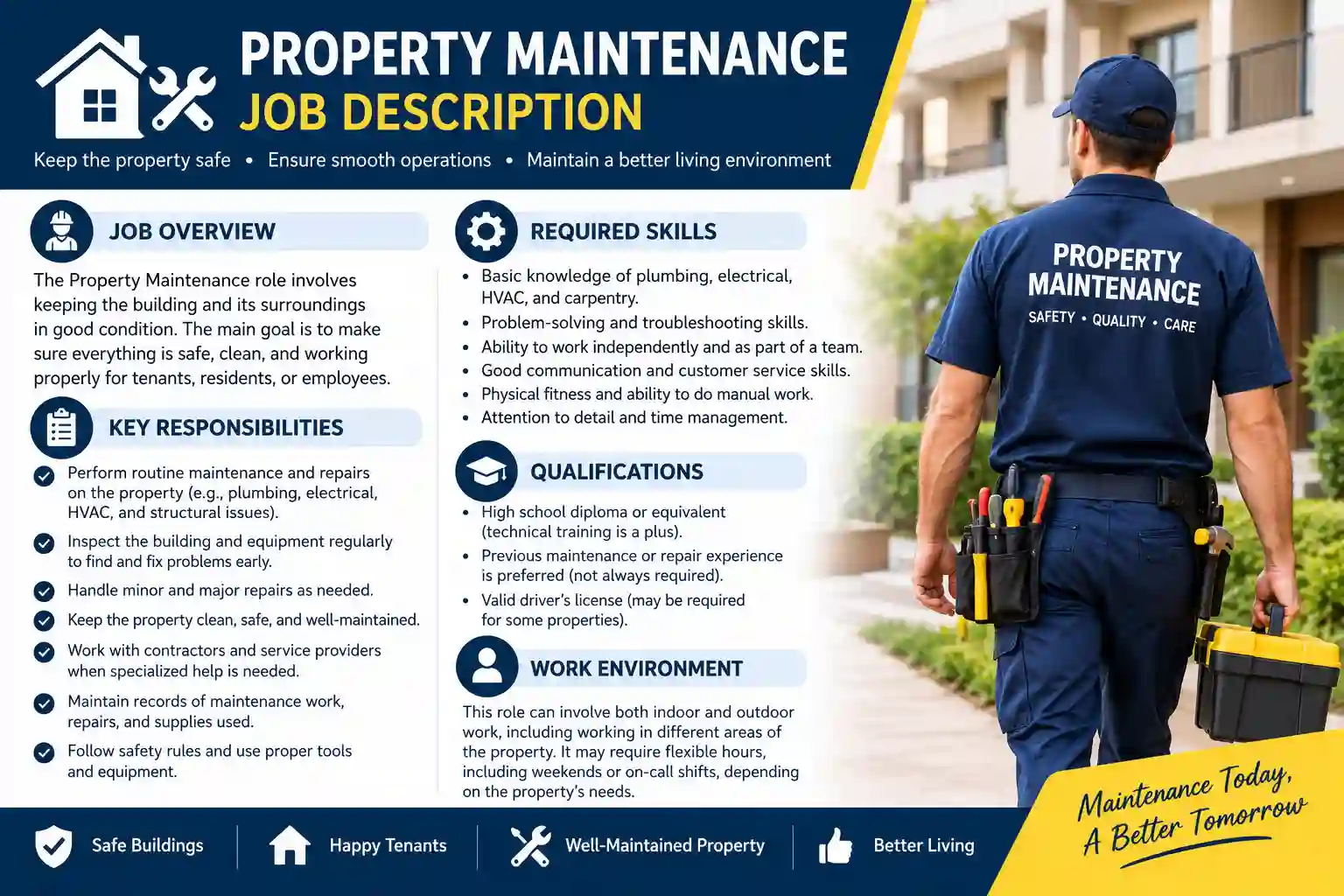
A property maintenance job description explains the work needed to keep buildings safe, clean, and in good condition. Property maintenance workers inspect buildings, repair damaged items, maintain equipment, and respond to repair requests.
They may work in houses, apartments, offices, hotels, shopping centers, and other commercial buildings. Some workers handle general repairs, while others specialize in heating, ventilation, and air conditioning (HVAC), plumbing, or other technical services.
This guide explains property maintenance duties, job requirements, salary factors, maintenance services, checklists, and resume examples. It also covers commercial HVAC technicians, split AC technicians, property maintenance managers, and other related roles.
What Is Property Maintenance?
Property maintenance means inspecting, cleaning, repairing, and caring for buildings and their equipment. Its purpose is to keep a property safe, useful, and comfortable while preventing avoidable damage.
Property maintenance tasks may include repairing leaking taps, checking heating and cooling systems, painting walls, fixing doors, inspecting roofs, maintaining outdoor areas, and responding to tenant complaints.
Property maintenance is important for both residential and commercial properties. Residential maintenance focuses on houses and apartments, while commercial maintenance covers offices, stores, hotels, warehouses, and other business buildings.

Property Maintenance Job Description Template
Employers can use this general property maintenance job description when hiring a maintenance worker.
Job Title: Property Maintenance Technician
Job Type: Full-time, part-time, contract, or internship
Job Summary:
We are looking for a reliable property maintenance technician to inspect buildings, complete general repairs, and maintain property equipment. The successful candidate will respond to maintenance requests, perform routine inspections, identify potential safety problems, and coordinate with qualified contractors when specialist work is needed.
Duties and Responsibilities:
- Inspect buildings, equipment, appliances, and common areas.
- Perform general repairs, painting, and minor carpentry.
- Check plumbing fixtures and report water leaks.
- Inspect HVAC equipment and report system problems.
- Complete approved repairs and installations.
- Respond to tenant and property manager requests.
- Follow preventive maintenance schedules.
- Maintain tools, supplies, and repair records.
- Create and update maintenance work orders.
- Coordinate with subcontractors on larger repairs.
- Follow workplace safety procedures.
- Report serious damage and equipment failures.
Qualifications and Requirements:
- High school diploma or equivalent may be preferred.
- Previous maintenance experience may be required.
- Basic knowledge of building repairs and equipment.
- Good communication and problem-solving skills.
- Ability to organize tasks and follow instructions.
- Ability to perform the physical duties of the job safely.
- Relevant technical training or certifications for specialist work.
Employers should adjust this template to match the building, working hours, required experience, and actual responsibilities.
Property Maintenance Duties and Responsibilities
Property maintenance duties vary according to the building and the worker’s skills. Most positions include inspections, repairs, equipment maintenance, recordkeeping, and safety tasks.
Building Inspections
Workers inspect walls, ceilings, floors, doors, windows, roofs, and other building components. They look for cracks, leaks, damaged fixtures, and signs of wear.
Regular inspections help identify small problems before they become expensive repairs.
Plumbing Maintenance
Basic plumbing duties may include checking taps, inspecting visible pipes, reporting blocked drains, and repairing simple fixtures when permitted.
Complex plumbing problems and repairs requiring specialist qualifications should be handled by a qualified plumber.
Electrical Maintenance
Workers may check lighting, report damaged switches, replace bulbs, and identify visible electrical problems when these tasks are within their training and authorization.
Electrical repairs should be performed by appropriately qualified personnel. Workers should never handle exposed wiring or dangerous electrical faults without the required training and safety procedures.
HVAC Maintenance
Heating, ventilation, and air conditioning systems help control indoor temperature and air circulation.
Property maintenance workers may check accessible components, report unusual noises, inspect filters according to manufacturer instructions, and arrange specialist servicing.
Larger buildings may contain boilers, chillers, ventilation equipment, and complex HVAC controls that require trained technicians.
Painting and Carpentry
Maintenance workers may paint walls, repair minor surface damage, adjust doors, replace handles, and fix simple wooden fixtures.
These tasks help maintain the appearance and function of a property.
Grounds and Outdoor Maintenance
Some positions include lawn care, landscaping, walkway inspections, outdoor lighting checks, and reporting damaged fences or drainage problems.
The exact duties depend on the property and the maintenance agreement.
Tenant Requests and Work Orders
Workers receive maintenance requests from tenants, landlords, or property managers. They record the issue, assess its urgency, complete approved repairs, and update the work order.
Clear communication helps tenants understand when repairs will be completed and whether a specialist needs to visit.
Safety and Recordkeeping
Maintenance workers follow workplace safety rules, use appropriate protective equipment, and keep tools and work areas organized.
They also record inspections, repairs, parts used, and unfinished tasks. These records help managers track maintenance costs and identify recurring problems.

Types of Property Maintenance
Understanding the main types of property maintenance helps owners plan repairs and manage building equipment.
Preventive Maintenance
Preventive maintenance involves scheduled inspections and servicing designed to reduce the risk of equipment failure.
Examples include changing HVAC filters according to manufacturer guidance, inspecting gutters, checking for water leaks, and arranging routine equipment servicing.
Corrective Maintenance
Corrective maintenance takes place after a problem has been identified.
Examples include repairing a broken door handle, fixing a leaking pipe, or replacing a faulty equipment component.
Emergency Maintenance
Emergency maintenance addresses problems that create an immediate safety risk or could cause serious property damage.
Examples may include major water leaks, dangerous electrical faults, and certain heating or cooling failures.
Workers should follow emergency procedures and contact qualified professionals when necessary.
Predictive Maintenance
Predictive maintenance uses equipment condition, inspection findings, or monitoring data to help estimate when servicing may be needed.
It is particularly useful for facilities with complex equipment and systems that require regular monitoring.
Property Maintenance Services List
A property maintenance company may provide several services depending on its staff, equipment, and service agreements.
Common property maintenance services include:
- General building inspections.
- Plumbing maintenance and leak checks.
- Authorized electrical maintenance.
- HVAC servicing and repair coordination.
- Painting and minor carpentry.
- Door, window, and lock repairs.
- Roof and gutter inspections.
- Cleaning and common area maintenance.
- Landscaping and grounds care.
- Pest control coordination.
- Preventive maintenance planning.
- Emergency repair services.
- Rental unit preparation.
- Appliance checks and repairs where offered.
- Work order management and maintenance reporting.
Not every company provides all these services. Some hire specialist contractors for electrical work, plumbing, roofing, pest control, and other technical tasks.
Residential Property Maintenance Services
Residential property maintenance focuses on houses, apartments, condominiums, and rental homes.
Typical services include repairing fixtures, checking plumbing, maintaining heating and cooling systems, inspecting doors and windows, reporting water damage, and keeping shared spaces in good condition.
Residential maintenance may also include preparing vacant units for new tenants, arranging specialist repairs, checking required safety devices, and maintaining outdoor areas.
A regular maintenance schedule helps property owners identify problems early and keep homes safe and comfortable.
Commercial Property Maintenance Job Description
Commercial property maintenance covers buildings used for business, including offices, retail stores, hotels, warehouses, and shopping centers.
A commercial property maintenance worker may inspect building systems, complete general repairs, coordinate contractors, respond to work orders, and maintain shared areas.
Commercial buildings may contain complex HVAC systems, boilers, ventilation equipment, lighting systems, and safety equipment. Workers must follow site-specific procedures and leave specialist work to appropriately qualified professionals.
The job description should explain the building type, equipment involved, working hours, reporting structure, and required qualifications.
Commercial HVAC Technician Job Description
A commercial HVAC technician installs, inspects, maintains, and repairs heating, ventilation, and air conditioning systems in commercial buildings.
The technician helps maintain comfortable indoor conditions and supports the reliable operation of building equipment.
Main responsibilities include:
- Inspecting commercial heating and cooling equipment.
- Performing preventive maintenance on HVAC systems.
- Checking filters, thermostats, ventilation, and system performance.
- Troubleshooting equipment faults.
- Identifying unusual noises, airflow problems, and temperature issues.
- Completing authorized repairs and replacing approved components.
- Maintaining service records and documenting completed work.
- Responding to urgent equipment failures.
- Coordinating with property managers and maintenance workers.
- Arranging specialist service when necessary.
Commercial HVAC technicians may work with rooftop units, split systems, boilers, chillers, pumps, ventilation equipment, and related controls, depending on the property.
Employers may require vocational training, practical experience, and relevant certifications. Requirements for refrigerant handling and electrical work depend on local rules and the tasks involved.
Split AC Technician Job Description
A split AC technician installs, inspects, maintains, and repairs split air conditioning systems used in homes, apartments, offices, and shops.
A split AC system generally contains an indoor unit and an outdoor unit connected through the system’s piping and electrical components.
Common responsibilities include:
- Inspecting indoor and outdoor AC units.
- Checking filters, airflow, drainage, and thermostat operation.
- Diagnosing cooling problems and unusual noises.
- Cleaning components according to manufacturer instructions.
- Identifying refrigerant-related problems.
- Checking electrical and mechanical components within the technician’s qualifications.
- Installing or replacing components when authorized.
- Testing system operation after servicing.
- Recording repairs and explaining findings to customers or property managers.
Split AC technicians need practical troubleshooting skills and knowledge of air conditioning systems. Refrigerant handling, electrical repairs, and installation work may require specialized training and authorization.
Full-Time Property Maintenance Job Description
A full-time property maintenance worker handles regular repairs, scheduled inspections, and ongoing building care. The role may involve working across several apartments, rental properties, or commercial buildings.
Typical duties include completing work orders, checking building systems, maintaining common areas, coordinating contractors, and reporting major problems.
Employers should explain working hours, emergency responsibilities, travel requirements, and any on-call duties.
Part-Time Property Maintenance Job Description
A part-time property maintenance worker performs maintenance tasks for fewer hours than a full-time employee.
This role may suit smaller properties, apartment buildings, offices, or businesses with limited maintenance needs.
Common duties include minor repairs, routine inspections, fixture replacement, basic grounds care, and reporting problems to a supervisor.
The job description should specify the working schedule, assigned duties, and process for reporting urgent maintenance issues.
Contract Property Maintenance Job Description
A contract maintenance worker is hired for a specific project, period, or agreed set of services.
The work may involve property renovations, painting, seasonal inspections, equipment servicing, or repairs across several buildings.
The contract should explain the work scope, deadlines, payment terms, safety requirements, responsibility for materials, and any specialist qualifications required.
Property Maintenance Internship
A property maintenance intern learns basic maintenance procedures while supporting experienced workers.
Typical responsibilities include:
- Helping with routine building inspections.
- Organizing tools and supplies.
- Updating work order records.
- Assisting with basic repairs under supervision.
- Reporting visible damage and maintenance problems.
- Learning workplace safety procedures.
- Supporting preventive maintenance schedules.
Interns should receive appropriate supervision and should not perform dangerous or specialist work without the necessary training and authorization.
Property Maintenance Employees and Their Roles
Property maintenance often involves several employees working together. Clearly defined roles help ensure inspections, repairs, and cleaning tasks are completed properly.

Property Manager
A property manager oversees daily property operations. Responsibilities may include arranging repairs, responding to tenant complaints, managing maintenance budgets, coordinating contractors, and reviewing work orders.
Property Maintenance Technician
A maintenance technician performs inspections, general repairs, equipment checks, and approved maintenance tasks.
The technician may handle minor plumbing repairs, painting, carpentry, fixture replacement, and routine building maintenance.
Janitor or Custodian
A janitor or custodian focuses on cleanliness and hygiene. Duties may include cleaning floors, disinfecting surfaces, cleaning bathrooms, emptying rubbish bins, and restocking cleaning supplies.
Maintenance Supervisor
A maintenance supervisor assigns tasks, monitors work quality, supports safety procedures, and helps technicians complete jobs on schedule.
Maintenance Coordinator
A maintenance coordinator organizes requests, schedules repairs, updates work orders, and communicates with tenants, contractors, and managers.
In smaller properties, one employee may perform several functions. Technical repairs and cleaning duties should still be assigned according to training, safety requirements, and the job agreement.
Rental Property Maintenance Job Description
A rental property maintenance worker keeps rental houses and apartments in good condition.
Common responsibilities include:
- Responding to tenant maintenance requests.
- Inspecting plumbing fixtures and visible leaks.
- Checking doors, windows, locks, and other fittings.
- Reporting heating, cooling, and electrical problems.
- Completing approved minor repairs.
- Preparing units for new tenants.
- Updating maintenance records.
- Coordinating with property managers and specialist contractors.
The worker should document problems clearly and report urgent issues promptly.
Landlord and tenant responsibilities vary according to local law and lease terms. The job description should clearly define the maintenance worker’s role rather than assuming every repair is their responsibility.
Property Maintenance Technician Job Description
A property maintenance technician inspects buildings, identifies maintenance problems, and completes repairs within their area of training.
Typical duties include diagnosing common maintenance issues, completing approved repairs, performing preventive maintenance, inspecting equipment, maintaining tools, recording completed work, updating work orders, and coordinating with contractors.
Employers may prefer candidates with technical training, maintenance experience, or relevant certifications.
Property Maintenance Manager Job Description
A property maintenance manager plans and oversees maintenance operations for one or more properties.
Common responsibilities include:
- Developing maintenance plans and schedules.
- Assigning tasks to technicians.
- Managing maintenance budgets and supplies.
- Reviewing work orders and repair records.
- Coordinating specialist contractors.
- Monitoring property condition and safety.
- Prioritizing urgent repairs.
- Reviewing recurring equipment problems.
- Reporting maintenance needs to property owners.
This role often requires leadership, organization, budgeting, communication, and problem-solving skills.
Property Maintenance Supervisor Job Description
A property maintenance supervisor oversees daily maintenance work and supports technicians.
Duties may include assigning jobs, checking completed repairs, reviewing work orders, monitoring supplies, supporting inspections, and reporting major issues to management.
Previous maintenance experience and the ability to guide a team are often useful. Some employers may also require technical qualifications.

Property Maintenance Coordinator Job Description
A property maintenance coordinator organizes maintenance requests and schedules work.
Typical duties include receiving repair requests, creating work orders, arranging contractor visits, tracking job progress, updating records, and following up on unfinished tasks.
This position often involves more administration and scheduling than hands-on repairs. Strong organization, communication, and computer skills are important.
Property Management Maintenance Technician Job Description
A property management maintenance technician works with a property management company to maintain the buildings it manages.
Responsibilities may include responding to tenant requests, inspecting rental units, completing approved repairs, preparing vacant apartments, and arranging specialist services.
Accurate work orders help property managers track repair status, costs, materials, and follow-up tasks.
Property Maintenance Checklist
A property maintenance checklist helps workers complete inspections consistently and record problems.

Daily or Routine Checks
- Look for visible leaks or water damage.
- Check common areas for hazards.
- Report damaged doors, locks, and windows.
- Look for unusual equipment noises or smells.
- Keep walkways and exits clear.
- Record new maintenance requests.
Monthly Checks
- Inspect visible plumbing for leaks.
- Check accessible HVAC filters according to manufacturer guidance.
- Look for damaged walls, ceilings, and flooring.
- Inspect common area lighting.
- Review unfinished work orders.
- Check tools and maintenance supplies.
Seasonal or Periodic Checks
- Inspect roofs and gutters when safe and accessible.
- Check door and window seals.
- Arrange heating and cooling system servicing as needed.
- Review outdoor drainage.
- Inspect exterior surfaces for damage.
- Schedule required professional inspections.
This is a general checklist. The actual schedule should reflect the property, equipment instructions, climate, safety requirements, and applicable regulations.
Property Inspection Checklist for Rental Homes
Rental property inspections help identify maintenance problems before they become more serious.
A rental inspection may cover:
- Walls, ceilings, floors, and signs of dampness.
- Plumbing fixtures and visible leaks.
- Doors, windows, locks, and weather seals.
- Heating, ventilation, and cooling equipment.
- Required safety devices.
- Appliances included with the rental.
- Outdoor areas, drainage, and walkways.
- Previously reported repair issues.
Inspections must follow applicable laws, lease terms, notice requirements, and tenant privacy protections.
Property Maintenance Priorities
Maintenance requests should be organized according to urgency, safety risks, and the chance of further damage.
Emergency: Problems involving immediate danger or serious property damage, such as a dangerous electrical fault or major water leak.
High priority: Problems that could quickly damage the building or seriously affect occupants, such as significant cooling failure during extreme heat.
Routine: General repairs, planned servicing, and minor fixture problems.
Low priority: Cosmetic improvements and minor work that does not create an immediate safety or operational risk.
The correct priority depends on the actual situation and the property’s emergency procedures.
Property Maintenance Plan: How to Create One
A property maintenance plan organizes inspections, repairs, equipment servicing, and maintenance spending.
Step 1: List Building Systems and Equipment
Create an inventory of important assets, including plumbing systems, HVAC equipment, boilers, appliances, roofs, doors, windows, and safety devices.
Step 2: Identify Required Maintenance
Use inspection results, manufacturer instructions, professional recommendations, and applicable requirements to determine which tasks are needed.
Step 3: Create a Maintenance Schedule
Set appropriate intervals for routine checks, servicing, and inspections.
Step 4: Assign Responsibilities
Decide who will complete each task, who will review the results, and which jobs require qualified contractors.
Step 5: Record Maintenance Work
Use work orders or another reliable system to record problems, assign priorities, track repairs, and document completion.
Step 6: Review the Plan
Review recurring faults, overdue tasks, repair costs, and inspection results. Update the plan when the property’s needs change.
Property Maintenance Work Order: Example and Template
A work order records a maintenance problem and explains what needs to be done. It helps property managers assign tasks and track completion.
A basic work order should include:
- Work order number.
- Date the request was received.
- Property or unit location.
- Description of the problem.
- Priority level.
- Assigned worker or contractor.
- Materials or equipment required.
- Target completion date.
- Work completed and findings.
- Completion date and approval.
Example work order
Problem: Water leaking under the kitchen sink.
Location: Apartment 12, kitchen.
Priority: Based on the amount of water, safety concerns, and risk of damage.
Required Action: Inspect the leak, reduce the water supply if safe, and arrange an appropriate repair.
Completion Notes: Record the cause, repair performed, materials used, and any follow-up required.
Serious hazards should be handled through the property’s emergency procedures rather than delayed as routine work.
Property Maintenance Software and CMMS
Property maintenance software helps teams manage inspections, repair requests, schedules, equipment records, and maintenance costs.
A common option is a computerized maintenance management system, known as a CMMS.
Depending on the software, useful features may include:
- Creating and assigning work orders.
- Scheduling preventive maintenance.
- Tracking repair status and completion dates.
- Maintaining equipment records.
- Recording parts and supplies.
- Storing inspection checklists.
- Reviewing repair costs and reports.
- Setting reminders for scheduled tasks.
Small properties may use a spreadsheet or paper records. Larger properties with multiple buildings and maintenance workers may benefit from dedicated software.
When choosing a system, consider ease of use, cost, reporting features, mobile access, and whether tenants or contractors need access.
Property Maintenance Costs and Budget Planning
Property maintenance costs depend on the building’s size, age, condition, location, equipment, and repair needs.
A maintenance budget may include routine inspections, servicing, general repairs, replacement parts, contractor fees, cleaning, landscaping, emergency repair reserves, safety inspections, and equipment replacement.
Property owners can review previous invoices and work orders to identify recurring problems and estimate future expenses. Written estimates can help compare the scope and cost of larger repairs.
There is no single budget suitable for every property. Costs should be based on local prices, property condition, and professional advice where necessary.
Property Maintenance Tools Every Worker Needs
The tools required depend on the worker’s responsibilities and training.
Common general maintenance tools may include:
- Screwdrivers and pliers.
- Adjustable wrenches.
- Measuring tape and level.
- Hammer and basic hand tools.
- Flashlight.
- Suitable gloves and eye protection.
- Cleaning and repair supplies.
- A checklist or digital work order system.
Specialist equipment may be required for HVAC, plumbing, electrical, and other technical work. Workers should use tools only when trained and authorized.
Common Property Maintenance Problems and Solutions
Water Leaks
Water leaks can damage walls, ceilings, floors, and belongings. Report leaks quickly, reduce the water source if safe, and arrange the correct repair.
HVAC Problems
Poor airflow, unusual noises, or inconsistent temperatures may indicate an equipment problem. Arrange an inspection and use a qualified HVAC technician when required.
Damaged Doors and Windows
Broken locks, loose handles, and damaged seals can affect security and comfort. Repair or replace faulty components and report safety concerns.
Dampness and Mold
Dampness may result from leaks, condensation, or poor ventilation. Identify and address the moisture source and follow suitable cleaning or professional remediation procedures.
Repeated Equipment Failures
Recurring breakdowns may indicate that equipment needs further inspection, a different maintenance approach, or replacement. Repair records can help identify patterns.
How to Choose a Property Maintenance Company
A property maintenance company may provide inspections, general repairs, equipment servicing, and contractor coordination.

Before hiring a company, consider:
- Services included in the agreement.
- Experience with similar properties.
- Worker qualifications and relevant certifications.
- Insurance and other required credentials.
- Emergency response arrangements.
- Written estimates and service terms.
- Customer feedback and references.
- Work order reporting and recordkeeping.
Ask which services are performed directly and which are subcontracted. Compare the complete scope of work rather than choosing only by the quoted price.
Property Maintenance Skills and Qualifications
Property maintenance workers need practical, technical, and communication skills.
Technical skills: Basic troubleshooting, inspections, repairs, and familiarity with relevant building systems.
Problem-solving: The ability to identify problems and decide when a specialist is needed.
Communication: Clear communication with tenants, managers, supervisors, and contractors.
Time management: The ability to prioritize urgent work and complete scheduled tasks.
Recordkeeping: Accurate work orders, inspection notes, and repair records.
Safety awareness: Following safety rules and avoiding work outside one’s training or authorization.
Entry-level positions may provide on-the-job training. Other roles may require experience, technical qualifications, or licenses for specialist work.
Property Maintenance Job Description for Resume
Job seekers can use relevant property maintenance duties on a resume. Each statement should reflect work they have actually performed.
Example resume summary:
Reliable property maintenance worker with experience in routine inspections, general repairs, work order updates, and property upkeep. Skilled in identifying maintenance problems, organizing tasks, following safety procedures, and communicating with property managers.
Example resume bullet points:
- Completed routine inspections and reported building maintenance issues.
- Performed general repairs and property upkeep.
- Responded to maintenance requests and documented completed work.
- Assisted with preventive maintenance schedules.
- Coordinated with supervisors and contractors.
- Maintained clean and safe work areas.
- Updated work orders and reported unfinished tasks.
Candidates should include relevant tools, software, technical training, certifications, and measurable achievements when accurate.
Property Maintenance Salary
Property maintenance salary depends on location, experience, employer, working hours, job duties, and required qualifications.
Entry-level general maintenance workers may earn less than experienced technicians, supervisors, and managers. Specialist skills in HVAC, plumbing, or other technical areas may also affect pay.
Other factors include full-time or part-time employment, contract arrangements, emergency duties, property size, certifications, overtime, benefits, and local demand.

Property Maintenance Technician Salary
A property maintenance technician’s salary depends on practical skills, technical experience, certifications, and the systems they maintain.
To estimate salary accurately, compare current job advertisements in the relevant city or country. Check job titles, experience requirements, working hours, and benefits before comparing pay figures.
Frequently Asked Questions
Property maintenance means inspecting, repairing, and caring for buildings and their equipment to keep them safe and in good working condition.
It should include the job title, job summary, duties, qualifications, skills, work schedule, safety expectations, and reporting responsibilities.
Common services include building inspections, plumbing maintenance, HVAC servicing, general repairs, painting, landscaping, cleaning, and preventive maintenance.
A commercial HVAC technician maintains and repairs heating, ventilation, and air conditioning systems in commercial buildings. Duties may include inspections, troubleshooting, scheduled servicing, and equipment repair.
A split AC technician installs, inspects, maintains, and repairs split air conditioning systems. The role may include checking airflow, cleaning components, identifying faults, and testing system performance.
A general maintenance worker usually handles a range of routine tasks. A technician may have more specialized training and responsibilities involving particular equipment or building systems.
A property maintenance checklist is a list of inspection and maintenance tasks used to identify problems, organize work, and record findings.
A computerized maintenance management system helps organize work orders, preventive maintenance schedules, equipment records, and repair information.
Salary depends on location, experience, employer, technical skills, and job responsibilities. Current local job advertisements are a useful starting point for salary research.
Yes. Some employers hire part-time workers for routine maintenance and contract workers for specific projects or agreed services.
Responsibilities depend on local law and lease terms. Landlords, tenants, property managers, and maintenance workers may have different duties.
Preventive maintenance is planned to reduce the chance of future problems. Corrective maintenance fixes a problem after it has been identified.
Final Thoughts
A well-written property maintenance job description helps employers explain their expectations and helps job seekers understand the role. Property maintenance involves more than fixing broken items. It includes inspections, preventive planning, equipment care, work order management, safety, and communication.
Whether a property needs a general maintenance worker, a commercial HVAC technician, a split AC technician, a supervisor, or a manager, the job description should clearly explain the duties and required qualifications.
Property owners can also improve maintenance operations through regular checklists, accurate records, suitable software, and a practical maintenance plan. These steps help keep residential and commercial properties safe, functional, and well maintained.

Ryan Mitchell writes job descriptions, role overviews and general description guides in plain, easy-to-follow language. He focuses on listing duties, skills and requirements clearly, so readers can understand a role or topic without wading through jargon.