

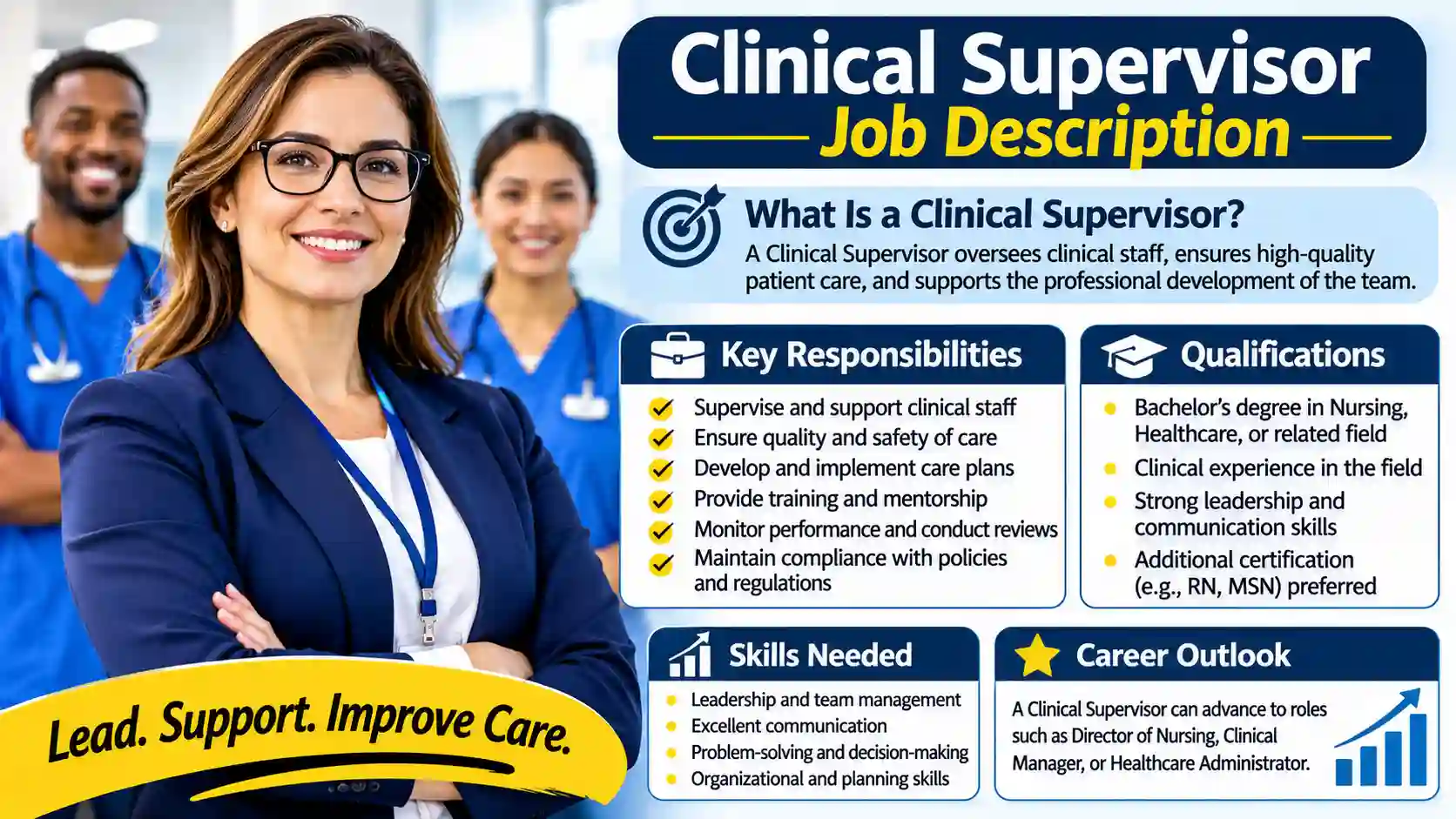
A clinical supervisor plays an important role in healthcare, mental health, and behavioral health organizations. This professional guides clinical staff, monitors patient care, supports treatment planning, and makes sure that services meet professional and organizational standards.
A clinical supervisor may work in a hospital, mental health clinic, counseling center, nursing facility, outpatient center, or community health program. The exact responsibilities depend on the workplace, clinical specialty, and level of experience required.
What Is a Clinical Supervisor?
A clinical supervisor is an experienced healthcare or mental health professional who provides guidance, supervision, and support to clinical employees. The role combines professional knowledge with leadership and management responsibilities.
Clinical supervisors help therapists, counselors, nurses, social workers, and other clinicians improve their work. They may review patient or client records, discuss difficult cases, monitor treatment progress, and provide feedback to staff.
Clinical Supervisor Job Description Template

Job Title: Clinical Supervisor
Job Summary:
We are seeking an experienced and qualified Clinical Supervisor to oversee clinical staff, support daily operations, and maintain high standards of patient care. The successful candidate will provide professional guidance, monitor clinical performance, review documentation, and help staff follow organizational policies and professional standards.
Key Responsibilities:
- Supervise and support clinical staff.
- Review patient or client records and treatment plans.
- Monitor the quality of clinical services.
- Support clinical assessments and case consultations.
- Help staff manage challenging cases and crisis situations.
- Conduct performance evaluations and provide feedback.
- Organize staff training and professional development.
- Maintain accurate clinical documentation.
- Promote ethical practices and confidentiality.
- Support quality assurance and continuous improvement.
- Coordinate with managers and other healthcare professionals.
Qualifications:
- Relevant degree in healthcare, nursing, psychology, counseling, social work, or a related field.
- Previous clinical experience.
- Experience in a supervisory or leadership role.
- Strong communication and organizational skills.
- Knowledge of clinical standards and documentation procedures.
Work Type: Full-time or part-time, depending on the organization.
Work Environment: Hospitals, clinics, mental health centers, behavioral health programs, and other healthcare facilities.
Clinical Supervisor Duties and Responsibilities
Clinical supervisor duties and responsibilities vary by workplace.
1. Supervising Clinical Staff
Clinical supervisors guide nurses, therapists, counselors, social workers, and other clinical employees. They explain workplace procedures, answer professional questions, and help staff manage their responsibilities.
2. Providing Clinical Supervision
Clinical supervision helps professionals improve their knowledge, judgment, and practical skills. Supervisors may arrange individual supervision sessions, group supervision meetings, and case discussions.
3. Monitoring Patient and Client Care
A clinical supervisor checks whether services meet appropriate care standards. This may involve reviewing treatment progress, discussing patient concerns, and identifying areas that need improvement.
In mental health settings, supervisors may help clinicians review client needs and evaluate treatment approaches.
4. Reviewing Clinical Documentation
Clinical supervisors may review patient records, progress notes, treatment plans, assessment reports, and electronic health records (EHR).
They check that documentation is accurate, complete, timely, and consistent with organizational policies.
5. Supporting Treatment Planning
Supervisors help clinical professionals develop suitable treatment plans based on patient or client needs. They may review clinical assessments, discuss treatment goals, and recommend changes when progress is limited.
The final clinical decisions must remain within each professional’s qualifications, license, and authorized scope of practice.
6. Managing Clinical Operations
Some clinical supervisor positions include operational responsibilities. These may involve employee scheduling, caseload assignment, recruitment support, onboarding, and coordination with program managers.
7. Conducting Performance Evaluations
Clinical supervisors evaluate staff performance by reviewing work quality, professional behavior, documentation, and progress toward assigned goals.
They provide feedback and identify opportunities for training or improvement.
8. Maintaining Quality Assurance
Quality assurance involves checking whether clinical services meet organizational and professional standards. Supervisors may review records, monitor service outcomes, identify problems, and recommend improvements.
They may also participate in program evaluation and continuous improvement activities.
9. Handling Difficult Situations
Clinical supervisors support staff when they face difficult cases, workplace disagreements, or unexpected situations. They may provide guidance during crisis intervention and help employees follow the correct reporting and escalation procedures.
10. Supporting Professional Development
Supervisors encourage staff members to improve their clinical knowledge and professional skills. They may recommend training, mentoring, workshops, and other learning opportunities.
Clinical Supervisor Qualifications and Requirements
The qualifications for a clinical supervisor depend on the employer and the type of services provided.
Education Requirements
Many clinical supervisor positions require a bachelor’s or master’s degree in a relevant field.
Common educational backgrounds include:
- Nursing
- Social Work
- Psychology
- Counseling
- Behavioral Health
- Healthcare Administration
- Clinical Mental Health Counseling
Professional Licensing
Certain clinical supervisor positions require an active professional license. Examples may include:
- Licensed Marriage and Family Therapist (LMFT)
- Licensed Mental Health Counselor (LMHC)
- Licensed Independent Clinical Social Worker (LICSW)
- Registered Nurse (RN)
- Licensed Clinical Social Worker (LCSW)
These credentials are not interchangeable. The required license depends on the job, location, and professional responsibilities.
Clinical Experience
Employers often look for candidates with practical experience in their clinical specialty. Previous experience helps supervisors understand patient needs, workplace procedures, clinical documentation, and professional challenges.
Clinical Supervisor Skills and Competencies

A successful clinical supervisor needs clinical knowledge, leadership abilities, and strong communication skills.
Leadership Skills
Leadership helps supervisors guide employees, set expectations, solve problems, and encourage teamwork.
Communication Skills
Supervisors must explain procedures clearly, listen to staff concerns, and communicate effectively with patients, families, managers, and other professionals.
Clinical Judgment
Clinical judgment helps supervisors review cases, understand professional concerns, and guide staff toward appropriate decisions within their scope of practice.
Problem-Solving Skills
Clinical supervisors often deal with staffing problems, documentation errors, service delays, and difficult cases. They need to identify problems and find practical solutions.
Conflict Resolution
Workplace disagreements can affect team performance. Supervisors should handle conflicts professionally and encourage respectful communication.
Time Management
Managing meetings, staff schedules, clinical reviews, and administrative tasks requires good time management.
Organizational Skills
Supervisors must keep records organized, coordinate team activities, and make sure important responsibilities are completed on time.
Critical Thinking
Critical-thinking skills help supervisors evaluate information, review clinical situations, and identify areas that need attention.
Clinical Supervisor Job Description for Resume
When writing a clinical supervisor resume, focus on your clinical experience, leadership abilities, professional qualifications, and measurable contributions.
Your resume should show that you can support staff, maintain service quality, and manage clinical responsibilities.
Clinical Supervisor Resume Summary Example
Experienced Clinical Supervisor with a background in healthcare operations, staff supervision, and patient care coordination. Skilled in clinical documentation, team leadership, performance evaluation, and quality assurance. Able to support professional development, improve workplace procedures, and maintain high standards of clinical services.
Clinical Supervisor Resume Objective Example
Dedicated healthcare professional seeking a Clinical Supervisor position to use clinical knowledge, communication skills, and leadership experience to support clinical teams and improve patient care.
Clinical Supervisor Resume Skills
Consider including relevant skills such as:
- Clinical staff supervision
- Team leadership
- Clinical documentation
- Patient care coordination
- Treatment planning
- Case consultation
- Quality assurance
- Performance evaluation
- Staff training
- Crisis management
- Conflict resolution
- Clinical operations
- Communication
- Problem-solving
- Time management
Only include skills that accurately reflect your experience.
Clinical Supervisor Experience on a Resume
Use action-focused statements to explain your previous responsibilities.
Examples:
- Supervised clinical staff and provided regular professional guidance.
- Reviewed clinical documentation to support accuracy and compliance.
- Coordinated staff schedules and daily clinical activities.
- Supported treatment planning and case consultation.
- Monitored service quality and recommended improvements.
- Organized training sessions to strengthen staff performance.
- Worked with healthcare professionals to improve patient care.
Clinical Supervisor Job Description in Different Settings

Clinical supervisors work in different healthcare environments. Their duties change according to the patients they serve and the services their organizations provide.
Mental Health Clinical Supervisor
A mental health clinical supervisor guides therapists, counselors, and other mental health professionals. Responsibilities may include reviewing assessments, discussing client cases, monitoring treatment plans, and supporting ethical clinical practice.
They may also help staff use evidence-based approaches such as Cognitive Behavioral Therapy (CBT), Motivational Interviewing (MI), Dialectical Behavior Therapy (DBT), and Solution-Focused Therapy when appropriate.
Behavioral Health Clinical Supervisor
A behavioral health clinical supervisor oversees employees who provide behavioral health services. They may supervise treatment programs, review client progress, support crisis intervention, and monitor clinical documentation.
In some organizations, the role also includes staff development, case management support, and coordination with community service providers.
Hospital Clinical Supervisor
A hospital clinical supervisor helps coordinate clinical staff and daily patient care activities. Responsibilities may include monitoring department operations, supporting patient safety, reviewing staff performance, and communicating with department managers.
Medical Clinical Supervisor
A medical clinical supervisor may oversee clinical employees in a medical practice, outpatient facility, or healthcare center. The role can include staff coordination, clinical workflow monitoring, documentation reviews, and quality improvement.
Clinical Nurse Supervisor
A clinical nurse supervisor oversees nursing staff and supports safe nursing practices. Duties may include monitoring patient care, coordinating nursing schedules, assisting with staff development, and helping resolve clinical concerns.
RN Clinical Supervisor
An RN clinical supervisor is a registered nurse who performs supervisory responsibilities in a healthcare setting. The position may require an active RN license, nursing experience, and leadership abilities.
Depending on the workplace, responsibilities can include supervising nursing teams, reviewing care procedures, coordinating patient services, and supporting compliance with nursing standards.
Home Health Clinical Supervisor
A home health clinical supervisor oversees healthcare services delivered to patients in their homes. They may coordinate nurses and other care professionals, review patient care plans, monitor documentation, and support communication between staff and patients’ families.
ABA Clinical Supervisor
An ABA clinical supervisor works in Applied Behavior Analysis (ABA) services. This professional may guide behavior technicians, review behavior intervention plans, monitor client progress, and support the implementation of treatment programs.
Some positions require specific ABA qualifications and credentials. Requirements depend on the employer and applicable professional standards.
Clinical Research Supervisor
A clinical research supervisor supports the management of clinical research activities. Responsibilities may include coordinating research staff, monitoring study documentation, supporting protocol compliance, and helping maintain accurate research records.
Clinical Laboratory Supervisor
A clinical laboratory supervisor oversees laboratory operations and staff. Duties may include monitoring testing procedures, reviewing quality control activities, maintaining equipment standards, and supporting laboratory safety.
Clinical Social Work Supervisor
A clinical social work supervisor provides professional guidance to social workers. They may review client cases, support ethical decision-making, discuss treatment approaches, and help employees improve their professional skills.
LCSW Clinical Supervisor
An LCSW clinical supervisor is a Licensed Clinical Social Worker who provides supervision within the requirements of their jurisdiction and professional authorization. Responsibilities may include case consultation, professional mentoring, and supporting clinical social work practice.
Substance Use Disorder (SUD) Clinical Supervisor
An SUD clinical supervisor works with professionals who provide substance use disorder services. They may oversee treatment programs, review recovery plans, support staff, and monitor the quality of counseling and related services.
Dental Clinical Supervisor
A dental clinical supervisor helps oversee clinical operations in a dental practice or clinic. Responsibilities may include coordinating dental staff, monitoring infection control procedures, supporting patient care, and maintaining clinical standards.
Clinical Operations Supervisor
A clinical operations supervisor focuses on the administrative and operational side of clinical services. Duties may include staff scheduling, workflow coordination, resource planning, performance monitoring, and service improvement.
Clinical Services Supervisor
A clinical services supervisor manages or coordinates the delivery of clinical services. The position may involve supervising employees, monitoring service quality, managing operational issues, and supporting organizational goals.
Clinical Support Supervisor
A clinical support supervisor oversees employees who assist with clinical activities. Responsibilities may include coordinating support teams, monitoring administrative procedures, maintaining records, and helping clinical departments operate smoothly.
Clinical Assistant Supervisor
A clinical assistant supervisor may support a senior clinical supervisor with daily coordination, staff communication, documentation, and operational tasks. The exact duties depend on the organization’s structure.
Clinical Supervision: Types and Approaches
Clinical supervision is an ongoing professional process that helps healthcare and mental health workers improve their practice.
Common types include:
Individual Clinical Supervision
One supervisor meets with one employee to discuss clinical cases, professional concerns, and learning goals.
Group Clinical Supervision
Several professionals meet with a supervisor to discuss cases, share experiences, and learn from one another.
Peer Clinical Supervision
Professionals at a similar level discuss their work and provide feedback to each other. This approach does not replace formal supervision when a licensed or approved supervisor is required.
Reflective Clinical Supervision
Reflective supervision encourages professionals to think about their decisions, experiences, relationships with clients, and emotional responses to their work.
Clinical Supervision Models and Methods

Different organizations use different supervision approaches. Common methods include case discussions, direct observation, feedback sessions, mentoring, and reflective practice.
Some mental health settings may use approaches informed by CBT, DBT, or other clinical frameworks. The supervisor should select methods that fit the employee’s role, professional needs, and workplace requirements.
Clinical Supervision Ethics and Professional Boundaries
Clinical supervisors must maintain professional boundaries and follow relevant ethical standards. They should treat employees fairly, protect confidential information, and avoid conflicts of interest.
Important ethical responsibilities include:
- Maintaining confidentiality.
- Respecting professional boundaries.
- Providing fair and constructive feedback.
- Following licensing and workplace requirements.
- Recognizing the limits of their professional expertise.
- Reporting serious safety or ethical concerns through appropriate channels.
- Maintaining accurate supervision records.
Confidentiality is especially important when discussing patient information during supervision sessions.
Clinical Supervision Documentation and Record Keeping
Documentation helps organizations track supervision activities and professional development.
Depending on the workplace, records may include:
- Supervision dates and attendance.
- Topics discussed during meetings.
- Employee development goals.
- Feedback and recommendations.
- Training activities.
- Follow-up actions.
- Relevant performance concerns.
Clinical supervisors may also review electronic health records (EHR), patient progress notes, treatment plans, and assessment reports. All records should be handled according to privacy rules and organizational policies.
Clinical Supervisor Daily Responsibilities and Routine
A clinical supervisor’s daily routine depends on the size and type of organization. However, a typical working day may include several activities.
Morning:
- Review staffing levels and schedules.
- Check urgent clinical concerns.
- Communicate with department staff.
- Review pending documentation.
Midday:
- Conduct supervision meetings.
- Discuss patient or client cases.
- Review treatment plans and progress.
- Support staff with clinical questions.
Afternoon:
- Complete performance reviews.
- Coordinate with program managers.
- Review quality assurance reports.
- Plan training and follow-up activities.
This is a general example. Some supervisors spend more time on patient care, while others focus on administration and staff management.
Clinical Supervisor Performance Evaluation
Clinical supervisors may be evaluated based on their ability to manage staff, support quality care, and maintain effective clinical operations.
Common evaluation areas include:
- Staff performance and development.
- Quality of clinical services.
- Accuracy of documentation.
- Communication and teamwork.
- Compliance with workplace policies.
- Problem-solving and decision-making.
- Patient or client care standards.
- Completion of operational goals.
Regular feedback can help supervisors identify strengths and areas for improvement.
Clinical Supervisor Salary and Career Growth
Clinical supervisor salary varies according to location, education, licensing, experience, specialty, and employer.
For example, a clinical supervisor working in a hospital may have different responsibilities and compensation from someone supervising a community mental health program.
Factors that can affect salary include:
- Years of clinical experience.
- Professional license and qualifications.
- Supervisory experience.
- Type of healthcare organization.
- Geographic location.
- Department size and responsibilities.
- Full-time or part-time employment.
Some clinical supervisors advance into positions such as clinical manager, clinical director, behavioral health program director, or healthcare operations manager.
Clinical Supervisor vs. Clinical Manager
A clinical supervisor and a clinical manager may have similar responsibilities, but their main focus can be different.
| Clinical Supervisor | Clinical Manager |
| Focuses on staff supervision and clinical practice | Focuses on department or service management |
| Provides professional guidance | Manages operational goals |
| Reviews clinical performance | Monitors department performance |
| Supports clinical development | Coordinates staffing and resources |
| Helps maintain care standards | May oversee budgets and service operations |
In smaller organizations, one person may perform responsibilities from both roles.
Clinical Supervisor vs. Clinical Director
A clinical director usually holds a broader leadership position than a clinical supervisor.
A clinical supervisor often manages day-to-day clinical supervision and staff development. A clinical director may oversee several departments, develop clinical policies, manage program strategy, and coordinate major organizational decisions.
The exact difference depends on the organization’s size and reporting structure.
How to Become a Clinical Supervisor
Becoming a clinical supervisor usually requires a combination of education, practical experience, and leadership skills.
Step 1: Choose a Relevant Field
Start with a field such as nursing, psychology, counseling, social work, or another healthcare specialty.
Step 2: Complete Your Education
Earn the degree required for your chosen profession. Some clinical supervisor positions require a master’s degree or specialized training.
Step 3: Gain Clinical Experience
Work in your chosen field to develop practical knowledge and understand patient care, clinical procedures, and professional responsibilities.
Step 4: Obtain the Required License
If the position requires professional licensing, complete the necessary education, examinations, and licensing steps for your location.
Step 5: Develop Leadership Skills
Build experience in mentoring, staff coordination, communication, conflict resolution, and performance management.
Step 6: Apply for Supervisory Positions
Prepare a strong resume that highlights your clinical experience, qualifications, leadership abilities, and relevant achievements.
Clinical Supervisor Interview Questions and Answers
Preparing for an interview can help candidates explain their experience and demonstrate their leadership abilities.
1. What does a clinical supervisor do?
A clinical supervisor guides clinical staff, monitors service quality, supports professional development, and helps maintain appropriate clinical standards.
2. How do you handle an employee who is struggling with performance?
I would first identify the specific concerns, discuss them privately with the employee, and provide constructive feedback. I would then agree on improvement goals and follow up on progress.
3. How do you manage difficult clinical cases?
I review the available information, discuss the case with the appropriate professionals, and follow workplace procedures. I also make sure that decisions remain within professional and organizational guidelines.
4. How do you maintain quality clinical services?
I review documentation, monitor staff performance, support training, and encourage regular communication. I also identify problems and recommend improvements.
5. What makes you a good clinical supervisor?
A good clinical supervisor combines clinical knowledge with leadership, communication, problem-solving, and a commitment to professional development.
Is Clinical Supervisor a Good Career?

Clinical supervision can be a rewarding career for professionals who enjoy leadership, mentoring, and improving healthcare services.
The role offers opportunities to develop management skills, guide clinical employees, and contribute to better patient or client care. People considering this career should be comfortable making decisions, giving feedback, and managing professional responsibilities.
Frequently Asked Questions
The main responsibility is to guide clinical staff, monitor the quality of services, support professional development, and help maintain appropriate clinical standards.
Important skills include leadership, communication, clinical judgment, problem-solving, time management, conflict resolution, and team management.
Clinical supervision in mental health is a professional process in which an experienced and appropriately qualified professional guides therapists, counselors, or other mental health workers to improve their clinical practice.
A clinical supervisor resume should include relevant education, licenses, clinical experience, leadership abilities, staff supervision, documentation skills, and examples of professional achievements.
Final Thoughts
A clinical supervisor plays an important role in maintaining quality healthcare and supporting professional clinical teams. The position combines clinical knowledge, staff supervision, leadership, documentation, and quality assurance.

Ryan Mitchell writes job descriptions, role overviews and general description guides in plain, easy-to-follow language. He focuses on listing duties, skills and requirements clearly, so readers can understand a role or topic without wading through jargon.