

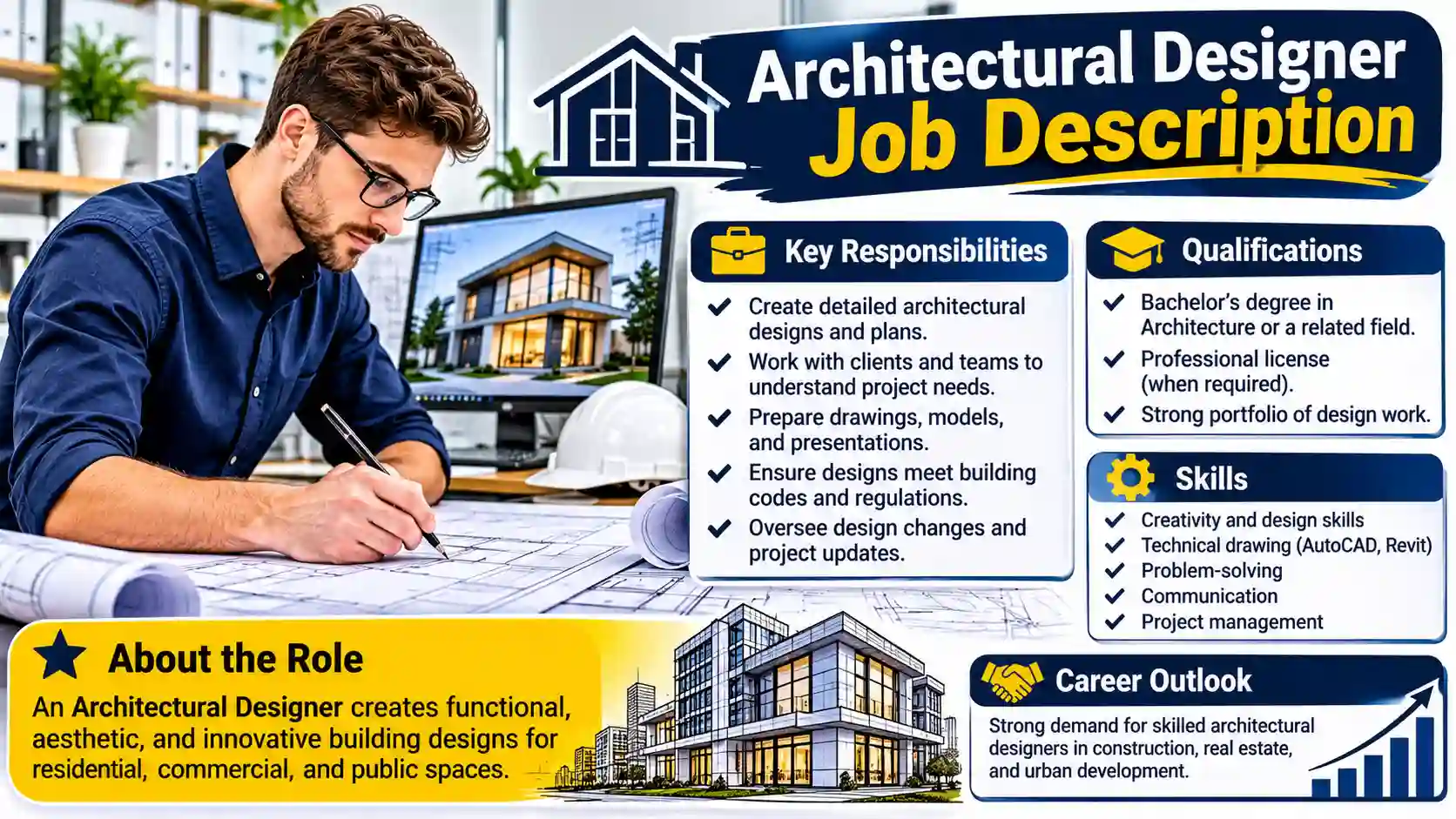
An architectural designer is a professional who helps plan, design, and develop buildings and other structures. They create design concepts, prepare architectural drawings, develop 3D models, and work with architects, engineers, clients, and contractors to turn project ideas into practical designs.
An architectural designer may work on residential, commercial, and mixed-use projects. The role combines creativity, technical knowledge, communication, and problem-solving skills. Depending on the company and project, an architectural designer may also assist with construction documentation, site visits, material selection, and project coordination.
This guide explains the architectural designer job description, daily responsibilities, required qualifications, technical skills, software knowledge, salary, and career opportunities.
What Does an Architectural Designer Do?
An architectural designer develops ideas and design plans for buildings. They work with clients and other professionals to understand project requirements and create designs that meet functional, aesthetic, safety, and regulatory needs.
Their work may include:
- Preparing initial sketches and design concepts.
- Creating floor plans, elevations, and sections.
- Developing 3D models and digital renderings.
- Preparing detailed architectural drawings and specifications.
- Reviewing building codes and zoning requirements.
- Coordinating with engineers, interior designers, and contractors.
- Visiting construction sites to review project progress.
- Selecting suitable materials, finishes, and construction products.
- Updating designs based on client feedback.
Architectural designers may work under senior architects or project managers. Their exact responsibilities depend on their experience, employer, location, and the type of projects they handle.
Architectural Designer Job Description

An architectural designer is responsible for developing architectural concepts, preparing technical drawings, and supporting building projects from the early design stage through construction documentation.
They collaborate with clients, architects, engineers, contractors, and other design professionals to ensure that projects meet design goals, budgets, timelines, building codes, and safety standards.
Architectural Designer Duties and Responsibilities
Common duties and responsibilities include:
- Meeting with clients to understand their needs, preferences, and project goals.
- Preparing sketches, preliminary plans, and architectural design concepts.
- Creating accurate floor plans, elevations, sections, and construction drawings.
- Using computer-aided design (CAD) software to prepare technical drawings.
- Developing 3D models and digital renderings to present design ideas.
- Working with senior architects to review and improve project designs.
- Coordinating with structural engineers and other specialists.
- Communicating with contractors and tradespeople about design requirements.
- Conducting site visits and reviewing site conditions.
- Considering environmental, spatial, and zoning factors during planning.
- Checking designs against applicable building codes and regulations.
- Helping select materials, finishes, and construction products.
- Preparing project proposals, specifications, and documentation.
- Updating drawings after client meetings and design reviews.
- Supporting construction administration and project coordination.
- Maintaining project records, budgets, and schedules.
The level of responsibility may increase as an architectural designer gains experience.
Key Skills Required for an Architectural Designer

A successful architectural designer needs a combination of creative, technical, and professional skills.
1. Design and Creativity
Design skills help architectural designers develop attractive and practical building concepts. They should understand space, proportion, layout, form, and visual balance.
2. Technical Drawing Skills
Architectural designers must understand how to prepare accurate technical drawings. These may include floor plans, elevations, sections, details, and construction documents.
3. CAD and 3D Modeling Skills
Knowledge of computer-aided design and 3D modeling tools helps designers prepare detailed plans and communicate design ideas.
4. Communication Skills
Architectural designers regularly communicate with clients, architects, engineers, contractors, and team members. Clear communication helps prevent misunderstandings during a project.
5. Problem-Solving Skills
Building projects often involve limitations related to space, materials, budgets, and regulations. Designers must find practical solutions while maintaining the project’s design goals.
6. Attention to Detail
Accurate measurements, clear drawings, and properly prepared specifications are important for reducing errors during design and construction.
7. Project Management and Organization
Designers may support several projects at the same time. Time management, organization, and record-keeping help them meet deadlines and coordinate their work.
Architectural Designer Qualifications and Education
Most employers prefer candidates with a bachelor’s degree in architecture, architectural design, or a related field. Some positions may require a master’s degree, specialized training, or relevant professional experience.
Common qualifications include:
- A degree in architecture or architectural design.
- Knowledge of architectural principles and design methods.
- Experience preparing architectural drawings.
- Familiarity with building codes and zoning regulations.
- Understanding of construction materials and methods.
- Proficiency in architectural design software.
- A portfolio showing previous design work.
- Strong written and verbal communication skills.
Some employers may consider candidates with relevant technical education, practical experience, or strong design portfolios. Requirements vary by employer and location.
Architectural Design Software and Tools
Architectural designers use different software programs to prepare drawings, models, and presentations.
Common tools include:
- AutoCAD: Used to prepare technical drawings and detailed plans.
- Revit: Used for Building Information Modeling (BIM) and coordinated building documentation.
- Rhino: Used for complex 3D modeling and design development.
- SketchUp: Used to create and present 3D architectural models.
- 3D Rendering Tools: Used to create realistic visual presentations of design concepts.
Employers may require knowledge of specific programs depending on their projects and design processes.
Architectural Designer Scope and Work Environment

Architectural designers can work in architecture firms, engineering companies, construction businesses, real estate development companies, and design studios.
Their work may involve office-based design tasks as well as meetings and construction site visits.
Common areas of work include:
- Residential buildings.
- Commercial buildings.
- Mixed-use developments.
- Educational facilities.
- Office spaces.
- Interior architecture projects.
- Renovation and remodeling projects.
- Sustainable building projects.
Architectural designers may coordinate with architects, structural engineers, civil engineers, interior designers, contractors, and project managers.
Architectural Designer vs. Architect
The terms architectural designer and architect are sometimes used differently by employers and professional organizations. Their meanings can also vary by country and local licensing rules.
An architect is generally a professional who meets the applicable education, experience, and licensing requirements to use the protected professional title and perform regulated architectural services.
An architectural designer may work on architectural projects without holding the same professional license. However, some licensed professionals may also have an architectural designer job title within a firm.
| Architectural Designer | Architect |
| Develops design concepts and drawings. | May lead and take professional responsibility for architectural projects. |
| May work under a senior architect or project manager. | May manage teams and coordinate overall project delivery. |
| Licensing requirements depend on the location and role. | Usually must meet local professional licensing requirements where the title is regulated. |
| May focus on modeling, drafting, and design development. | May handle design, approvals, documentation, and professional services. |
The distinction is not universal. For example, job titles used inside an architectural firm do not always indicate whether a person holds a professional license.
In the United States, professional licensing requirements are governed by the relevant state or jurisdiction. The American Institute of Architects (AIA) is a professional organization, but its membership and job-title classifications should not be confused with government licensing requirements.
Architectural Designer Job Titles and Career Levels

Architectural design teams may use different job titles depending on their structure and responsibilities.
Common related positions include:
- Junior Architectural Designer: Supports design development, drafting, modeling, and documentation.
- Architectural Designer: Prepares design concepts, drawings, models, and project documentation.
- Senior Architectural Designer: Handles more complex design work, reviews drawings, and may guide junior team members.
- Senior Designer: May lead design tasks and coordinate project teams.
- Job Captain: Often coordinates drawing production, documentation, and project details within an architectural firm.
- Project Manager: Oversees project schedules, budgets, communication, and delivery.
- Architectural Technologist: Focuses on technical design, building systems, detailing, and construction documentation. The exact meaning of this title varies by country.
These titles are not standardized across all firms. Responsibilities depend on the employer and the professional’s experience.
Junior Architectural Designer Job Description
A junior architectural designer assists senior designers and architects with basic design and documentation tasks.
Typical responsibilities include:
- Preparing preliminary drawings and sketches.
- Updating floor plans and elevations.
- Creating basic 3D models.
- Organizing project files and drawings.
- Learning design software and office standards.
- Supporting site visits and design meetings.
- Making drawing changes under supervision.
Employers often look for a relevant degree, basic software knowledge, attention to detail, and a willingness to learn.
Senior Architectural Designer Job Description
A senior architectural designer takes responsibility for more advanced design and coordination tasks.
Typical responsibilities include:
- Developing and reviewing complex design concepts.
- Preparing and checking detailed architectural drawings.
- Coordinating with architects, engineers, and contractors.
- Guiding junior designers and reviewing their work.
- Presenting design proposals to clients.
- Helping manage project timelines and design deliverables.
- Supporting construction documentation and administration.
- Identifying design problems and recommending solutions.
Senior designers usually have several years of relevant experience and a strong portfolio.
Architectural Designer Salary

Architectural designer salaries vary based on location, education, experience, employer, project type, and technical skills.
Factors that can influence salary include:
- Years of professional experience.
- Knowledge of AutoCAD, Revit, Rhino, and SketchUp.
- Project management responsibilities.
- Portfolio quality and design experience.
- Employer size and location.
- Professional qualifications and licensing where applicable.
Architectural Designer Salary in Pakistan
In Pakistan, architectural designer salaries can differ significantly between cities, companies, and experience levels. Entry-level designers may earn less than experienced professionals who can manage design development, technical drawings, and project coordination.
When researching salaries, compare current job advertisements in your city and check whether the listed amount is monthly or annual. Also consider benefits, working hours, and the responsibilities included in the job.
Architectural Designer Internship
An architectural designer internship gives students and recent graduates practical experience in an architectural office.
Interns may support:
- Preparing sketches and basic drawings.
- Updating CAD files.
- Creating 3D models.
- Organizing project documents.
- Assisting with presentations.
- Observing client meetings.
- Learning about construction documentation.
- Joining supervised site visits.
An internship can help students understand professional workflows, improve software skills, and build a portfolio.
Architectural Designer Portfolio and Resume
A strong portfolio helps employers understand a candidate’s design ability and technical knowledge.
A portfolio may include:
- Selected academic and professional projects.
- Floor plans, elevations, and sections.
- Concept sketches and design development.
- 3D models and renderings.
- Examples of technical drawings.
- Short descriptions explaining the purpose of each project.
An architectural designer resume should include education, relevant experience, software skills, internships, and important projects. Candidates should describe their actual responsibilities and avoid claiming professional qualifications or licenses they do not hold.
Architectural Designer Job Description Sample for Employers
Job Title: Architectural Designer
Job Summary:
We are seeking a creative and detail-oriented Architectural Designer to support the development of architectural projects. The successful candidate will prepare design concepts, technical drawings, 3D models, and project documentation while working with architects, engineers, clients, and contractors.
Key Responsibilities:
- Develop architectural design concepts and preliminary sketches.
- Prepare floor plans, elevations, sections, and detailed drawings.
- Create 3D models and digital renderings.
- Use architectural design software such as AutoCAD, Revit, Rhino, or SketchUp.
- Coordinate with architects, engineers, and other project professionals.
- Review applicable building codes and zoning requirements.
- Assist with material selection and design presentations.
- Update project drawings based on feedback.
- Support site visits and construction documentation.
Qualifications:
- Bachelor’s degree in architecture, architectural design, or a related field preferred.
- Experience with architectural drawings and 3D modeling.
- Knowledge of building materials and construction methods.
- Familiarity with building codes and design regulations.
- Strong communication, organization, and problem-solving skills.
- A portfolio demonstrating relevant design work.
Employment Type: Full-time
Experience Level: Based on the employer’s requirements.
How to Become an Architectural Designer

You can follow these steps to start a career in architectural design:
- Choose Relevant Education: Study architecture, architectural design, or a related subject.
- Learn Design Software: Build skills in AutoCAD, Revit, Rhino, and SketchUp.
- Understand Technical Drawings: Practice creating floor plans, elevations, sections, and details.
- Build a Portfolio: Collect your strongest academic, personal, and professional projects.
- Gain Practical Experience: Apply for internships or entry-level positions at architecture firms.
- Develop Professional Skills: Improve communication, teamwork, organization, and problem-solving.
- Understand Local Requirements: Learn about building regulations and professional licensing rules in your location.
With experience, architectural designers may move into senior design roles, project coordination, or other specialized areas.
Frequently Asked Questions
The main role of an architectural designer is to develop building design concepts, prepare architectural drawings, create models, and support projects through design development and documentation.
Most employers prefer a degree in architecture, architectural design, or a related field. Software knowledge, technical drawing skills, and a strong portfolio are also valuable.
Not always. The titles may have different meanings depending on the employer and location. In many places, the title architect is regulated and requires professional licensing, while architectural designer may describe a broader range of design roles.
Common programs include AutoCAD, Revit, Rhino, and SketchUp. Designers may also use additional 3D modeling and rendering tools.
In some locations, people can work in architectural design roles without an architect’s license. However, the services they can provide and the titles they can use depend on local laws and regulations.
A junior designer usually supports drawing, modeling, and documentation tasks under supervision. A senior designer handles more complex work and may review designs, coordinate teams, and guide junior employees.
Yes. Depending on the project and employer, architectural designers may visit construction sites to observe progress, review design details, and communicate with project teams.
A portfolio should include selected design projects, technical drawings, floor plans, elevations, sections, 3D models, renderings, and brief explanations of the designer’s contribution.
Final Thoughts
An architectural designer plays an important role in developing building concepts and turning design ideas into practical plans. The job combines creativity, technical drawing, software knowledge, communication, and project coordination.
Whether you are applying for a junior position, preparing a resume, or hiring an architectural designer, understanding the role’s duties and qualifications can help you make better decisions. A strong educational background, practical experience, and a well-organized portfolio can support long-term career growth in architectural design.

Ryan Mitchell writes job descriptions, role overviews and general description guides in plain, easy-to-follow language. He focuses on listing duties, skills and requirements clearly, so readers can understand a role or topic without wading through jargon.