

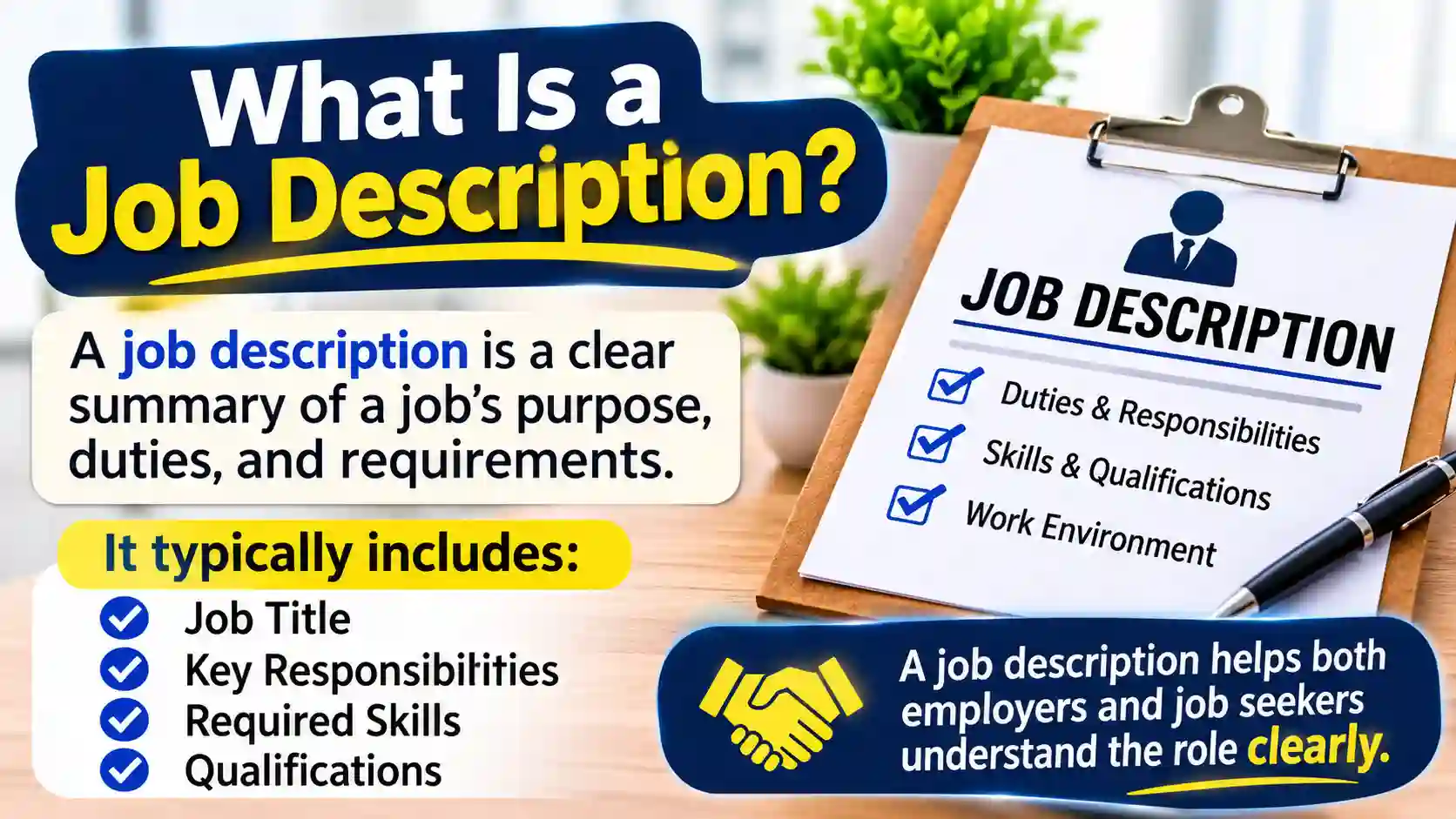
A job description is an important document used by companies and organizations. It explains what an employee does, what responsibilities they have, and what skills they need for a particular position.
Whether you are looking for a job, hiring an employee, or working in human resources (HR), understanding job descriptions can help you make better decisions.
A clear job description helps employers find the right people and helps employees understand their work. In this guide, you will learn what a job description is, why it is important, what it includes, and how to write one. You will also find simple job description samples for different positions.
What Is a Job Description?
A job description is a written document that explains the duties, responsibilities, qualifications, and requirements of a specific job. It tells employees what they need to do and what their employer expects from them.
For example, a cashier’s job description may include helping customers, receiving payments, giving receipts, and keeping the checkout area clean.
A job description usually includes the job title, a short summary, daily duties, required skills, working conditions, and reporting relationships.
It focuses on the position rather than the person who fills it. This helps employers and employees understand the purpose of the role.
What Is a Job Description in Business?
In business, a job description explains how a position supports the goals and daily activities of a company. It helps managers divide work and make sure every employee understands their responsibilities.

For example, a sales representative may be responsible for finding customers, explaining products, answering questions, and increasing sales.
Businesses use job descriptions to:
- Explain employee duties.
- Set clear work expectations.
- Find suitable job candidates.
- Improve teamwork.
- Support employee training.
- Review employee performance.
- Reduce confusion between different positions.
A clear job description also helps managers understand how each position supports the company.
What Is a Job Description in HR?
In human resources, a job description is used during recruitment, hiring, employee onboarding, and performance management.
The HR department helps prepare job descriptions so that employers can explain what they need from a candidate. Recruiters also use these documents to compare applicants with the requirements of a position.
After hiring, managers can use the job description to guide employees, plan training, and review their performance.
It also helps HR teams understand the skills and qualifications needed for different positions.
Why Is a Job Description Important?
A job description is important because it gives employers and employees a clear understanding of a job.
For employers:
- It helps attract suitable candidates.
- It makes the hiring process easier.
- It explains the skills needed for a position.
- It supports employee training.
- It helps managers assign tasks.
- It provides a basis for performance reviews.
For employees:
- It explains daily duties.
- It shows who they report to.
- It helps them understand work expectations.
- It identifies skills they need.
- It supports career development.
- It explains their responsibilities.
Without a clear job description, employees may become confused about their duties or what their manager expects from them.
What Should a Job Description Include?
A complete job description should contain the main information about a position. The exact details may change depending on the company and type of job.
1. Job Title
The job title is the name of the position. It should be clear and easy to understand.
Examples include:
- Sales Representative
- Office Manager
- Cashier
- Project Manager
- Administrative Assistant
- Customer Service Representative
2. Job Summary
The job summary gives a short explanation of the position. It tells readers why the job exists and what the employee does.
For example:
“A receptionist welcomes visitors, answers phone calls, manages appointments, and supports daily office activities.”
3. Duties and Responsibilities
This section explains the main tasks an employee must complete.
For example, an administrative assistant may:
- Answer phone calls and emails.
- Prepare documents.
- Organize office files.
- Schedule meetings.
- Welcome visitors.
- Support other employees.
The duties should be written in simple language and listed according to their importance.
4. Required Qualifications
Required qualifications are the minimum education, experience, and skills a person needs for the job.
They may include:
- A high school diploma or college degree.
- Previous work experience.
- Computer knowledge.
- Communication skills.
- Job-related training.
- Professional licenses or certificates.
5. Preferred Qualifications
Preferred qualifications are extra skills or experience that may help a candidate perform better.
For example, a company may require basic computer knowledge but prefer someone with previous office experience.
These qualifications are helpful but may not be necessary for every applicant.
6. Reporting Relationships
This section explains who the employee reports to and whether they supervise other workers.
For example:
- A cashier may report to a store manager.
- An administrative assistant may report to an office manager.
- A sales representative may report to a sales manager.
Reporting relationships help employees understand the company structure.
7. Working Conditions
Working conditions explain where, when, and how an employee performs their duties.
This information may include:
- Office or outdoor work.
- Full-time or part-time hours.
- Day or night shifts.
- Weekend work.
- Travel requirements.
- Remote or on-site work.
- Physical demands.
For example, a warehouse worker may need to lift boxes, while an office assistant may spend most of the day using a computer.
8. Authority and Decision-Making
This section explains what decisions an employee can make during their work.
For example, a team leader may assign tasks and guide other workers. A department manager may take part in hiring, scheduling, and performance reviews.
Clear information about authority helps prevent confusion between employees and managers.
What Is a Job Specification?
A job specification explains the type of person needed for a particular position. It focuses on the education, experience, knowledge, skills, and abilities required from a candidate.

A job description explains what an employee will do, while a job specification explains what the employee needs to do that work.
For example:
Job Description:
A receptionist answers phone calls, welcomes visitors, and manages appointments.
Job Specification:
The receptionist should have good communication skills, basic computer knowledge, and customer service experience.
Both documents help employers find suitable candidates and make better hiring decisions.
Job Description vs. Job Specification vs. Job Advertisement
These terms are related, but they have different purposes.
| Term | Meaning |
| Job Description | Explains the duties and responsibilities of a position. |
| Job Specification | Explains the skills, education, and experience required from a candidate. |
| Job Advertisement | Shares job information with people who may want to apply. |
A job advertisement is usually shorter and written to attract applicants. It may use information from the job description and job specification.
How to Write a Job Description
Writing a job description becomes easier when you follow a few simple steps.
1. Understand the Job
First, learn what the position actually involves. Talk to the manager, supervisor, or employees who understand the work.
This process is called job analysis. It helps you identify the real duties, responsibilities, and skills needed for the position.
2. Choose a Clear Job Title
Use a title that clearly explains the role. Avoid confusing or unusual titles that candidates may not understand.
3. Write a Short Job Summary
Explain the main purpose of the position in a few sentences. Make sure readers understand why the company needs this role.
4. List the Main Duties
Write the most important responsibilities first. Use clear action words such as:
- Manage
- Prepare
- Organize
- Support
- Review
- Maintain
- Communicate
Focus on the main duties instead of adding every small activity.
5. Add Required and Preferred Skills
Explain the education, experience, and skills needed for the job.
Keep required qualifications separate from preferred qualifications so applicants can understand which requirements are essential.
6. Explain Reporting Relationships
Mention who the employee reports to and whether they will manage or guide other workers.
7. Describe Working Conditions
Include important information about work hours, location, travel, physical requirements, and workplace conditions.
8. Review the Job Description
Ask the manager or supervisor to check the document. Make sure all information is correct and matches the actual position.
A job description should be reviewed when duties, responsibilities, or company needs change.
Simple Job Description Sample
Here is a simple job description sample that you can use as a starting point.
Job Title: Office Assistant
Department: Administration
Reports To: Office Manager
Job Summary:
The office assistant supports daily office activities. This person organizes files, answers phone calls, prepares documents, and helps other employees.
Duties and Responsibilities:
- Answer phone calls and emails.
- Organize office files.
- Prepare simple reports.
- Welcome visitors.
- Schedule meetings.
- Support daily office tasks.
Required Qualifications:
- High school diploma or equivalent.
- Basic computer skills.
- Good communication skills.
- Ability to organize tasks.
Preferred Qualifications:
- Previous office experience.
- Knowledge of office software.
- Customer service experience.
Working Conditions:
- Full-time office work.
- Regular business hours.
- Daily communication with employees and visitors.
This format can be changed to match different jobs and business needs.
Employee Job Description Example
An employee job description explains what a worker is expected to do in a particular position.
For example, a store assistant may have the following responsibilities:
- Help customers find products.
- Arrange products on shelves.
- Check product prices.
- Keep the store clean.
- Report stock problems.
- Support other store employees.
This document helps employees understand their duties and gives managers a clear way to review their work.
Job Description Examples for Different Jobs
Job descriptions change depending on the position. Below are some simple examples of common jobs.

What Is a Job Description of a Cashier?
A cashier helps customers pay for products and services. The main duties may include:
- Scanning products.
- Taking cash and card payments.
- Giving customers receipts.
- Answering basic questions.
- Keeping the checkout area clean.
- Reporting payment problems.
What Is a Job Description for an Administrative Assistant?
An administrative assistant supports office work and helps the team stay organized.
Main responsibilities include:
- Answering phone calls and emails.
- Preparing documents.
- Managing appointments.
- Organizing files.
- Scheduling meetings.
- Helping with daily office activities.
What Is a Job Description of a Caregiver?
A caregiver helps people who need support with daily activities. This may include older adults, people with disabilities, or individuals who need personal care.
Main duties include:
- Helping with daily routines.
- Preparing meals.
- Supporting personal care when required.
- Keeping the living area safe.
- Providing companionship.
- Reporting important changes to the appropriate person.
What Is a Job Description for a Project Manager?
A project manager plans and manages projects from beginning to end.
Main responsibilities include:
- Creating project plans.
- Setting deadlines.
- Assigning tasks.
- Managing project resources.
- Communicating with team members.
- Checking project progress.
- Reporting results to managers or clients.
What Is a Job Description of a Receptionist?
A receptionist welcomes visitors and manages front-desk activities.
Main duties include:
- Greeting visitors.
- Answering phone calls.
- Managing appointments.
- Receiving messages.
- Directing visitors to the right person.
- Keeping the reception area organized.
What Is a Job Description of a Sales Representative?
A sales representative helps a business sell its products or services.
Main responsibilities include:
- Finding potential customers.
- Explaining products and services.
- Answering customer questions.
- Building customer relationships.
- Following up with potential customers.
- Meeting sales goals.
- Preparing sales reports.
What Is Job Analysis and Why Does It Matter?
Job analysis is the process of collecting information about a position. It helps employers understand what employees do, which skills they need, and what responsibilities belong to the role.
A job analysis may include:
- Talking with current employees.
- Meeting with managers and supervisors.
- Reviewing daily tasks.
- Checking required skills.
- Understanding working conditions.
- Identifying important job responsibilities.
This information helps employers prepare an accurate job description. It also prevents them from adding duties or qualifications that do not match the actual position.
What Are Essential Job Functions?
Essential job functions are the main duties an employee must perform to complete a position.

For example, answering customer questions may be an essential function for a customer service representative. Preparing meals may be an essential function for a cook.
Employers should identify these duties clearly and explain any important physical requirements.
In the United States, employers may also need to consider the Americans with Disabilities Act (ADA) when describing essential job functions and workplace requirements.
What Is the Difference Between a Job Profile, Job Role, and Job Position?
These terms are sometimes used in a similar way, but they have different meanings.
- Job profile: A summary of a position, including its purpose, duties, skills, and qualifications.
- Job role: Explains the responsibilities and tasks a person performs at work.
- Job position: Refers to a specific place or opening within an organization.
For example, a company may have five sales representative positions. Each employee has the same general job role, but they may work with different customers or departments.
Who Is Responsible for Writing a Job Description?
A job description is usually prepared by people who understand the position and the company’s needs.
The people involved may include:
- HR Department: Helps prepare and organize the document.
- Hiring Manager: Explains the main needs of the position.
- Department Manager: Provides information about the team’s work.
- Current Employee: May explain the daily tasks they perform.
- Supervisor: Reviews and approves the final document.
Working together helps make the job description accurate and useful.
How Often Should a Job Description Be Updated?
A job description should be reviewed when an employee’s duties or work requirements change.
For example, a company may need to update it when:
- New responsibilities are added.
- Old duties are removed.
- The employee reports to a different manager.
- New technology changes the work.
- Working hours or conditions change.
- The position becomes more senior.
Many employers also review job descriptions during annual performance reviews. Regular updates help keep the information accurate.
How Do Job Descriptions Support Recruitment and Employee Onboarding?
Job descriptions play an important role in recruitment because they help employers explain what they need from applicants.
Recruiters can use them to:
- Prepare job advertisements.
- Identify suitable candidates.
- Compare applicant qualifications.
- Prepare interview questions.
- Explain the position to new employees.
After hiring, managers can use the job description during employee onboarding. New workers can read their duties, understand company expectations, and learn who they report to.
This makes it easier for employees to understand their roles from the beginning.
How Do Job Descriptions Help With Performance Management?
A job description can help managers understand whether employees are completing their main responsibilities.
During a performance review, managers can compare an employee’s work with the duties listed in the document.
For example, a sales representative may be expected to contact customers, follow up on leads, and meet sales targets.
Managers can review these duties and discuss areas where the employee is doing well or needs improvement.
Some companies also use key performance indicators (KPIs) to measure important work results. These measures should match the actual responsibilities of the position.
What Makes a Good Job Description?
A good job description should be clear, accurate, and easy to understand.
It should:
- Use a clear job title.
- Explain the purpose of the position.
- List the main duties.
- Include realistic qualifications.
- Separate required and preferred skills.
- Explain reporting relationships.
- Describe important working conditions.
- Use fair and professional language.
- Match the actual needs of the company.
It should also avoid unnecessary details that make the document difficult to read.
Common Mistakes to Avoid When Writing a Job Description
A poorly written job description can confuse employees and attract unsuitable candidates.
Avoid these common mistakes:

- Using unclear language: Write simple and direct sentences.
- Adding too many duties: Focus on the main responsibilities.
- Listing unrealistic requirements: Include only qualifications that the job needs.
- Ignoring working conditions: Explain important hours, locations, and physical demands.
- Using outdated information: Remove duties that are no longer part of the position.
- Forgetting reporting relationships: Explain who the employee reports to.
- Mixing required and preferred skills: Keep essential requirements separate from extra qualifications.
- Using unfair language: Describe the position in a professional and inclusive way.
A clear job description should reflect the real work and help candidates understand the position.
Frequently Asked Questions
A job description is a document that explains what a person does in a job. It lists the main duties, responsibilities, skills, and requirements of the position.
Its main purpose is to explain what an employee is expected to do. It also helps employers hire suitable people, provide training, and review work performance.
A job description explains the duties and responsibilities of a position. A job specification explains the education, experience, and skills a person needs for that job.
No. A job advertisement is used to attract candidates and encourage them to apply. A job description gives more details about the role and its responsibilities.
Yes. Employers can update it when duties, skills, working conditions, or reporting relationships change.
The hiring manager or supervisor usually reviews and approves it. The HR department may also help prepare and check the document.
It is helpful for every position to have a clear job description. It allows employees and managers to understand the duties and expectations of each role.
A simple job description sample includes a job title, short summary, duties, required qualifications, reporting manager, and working conditions. These sections explain what the employee needs to do.
Final Thoughts
A job description is an important part of hiring and managing employees. It explains the purpose of a position, its main duties, required skills, and working conditions.
A clear job description helps businesses find suitable candidates, guide new employees, and review performance. When writing one, use simple language, include accurate information, and focus on the most important responsibilities.

Ryan Mitchell writes job descriptions, role overviews and general description guides in plain, easy-to-follow language. He focuses on listing duties, skills and requirements clearly, so readers can understand a role or topic without wading through jargon.